Apple cheek fillers offer a non-surgical way to restore that lost volume. A well-placed injection can lift the mid-face, soften shadows around the nose, and bring back the facial proportions associated with youth — in under an hour.
This guide covers everything you need to make an informed decision: what apple cheeks actually are, how fillers restore them, which filler types exist, what the procedure involves, and what risks and aftercare look like.
Key Takeaways
- Apple cheeks refer to the round, fleshy mid-face prominence — distinct from the cheekbone area
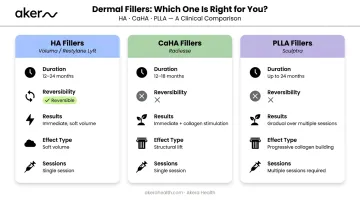
- Three main filler types are used: HA fillers (reversible), CaHA fillers (structural), and PLLA fillers (gradual collagen builders)
- Results appear immediately for HA and CaHA fillers; PLLA develops over several weeks
- Swelling and tenderness are common but temporary, typically resolving within 1–2 weeks
- Always consult a board-certified dermatologist first, as mid-face anatomy varies significantly between individuals
What Are Apple Cheeks? Understanding the Mid-Face
The Apple Cheek vs. the Cheekbone
"Apple cheeks" describe the round, fleshy prominence of the anteromedial mid-face — the area that puffs up visibly when you smile. This sits below the zygomatic arch (cheekbone), not along it. Many first-time patients confuse the two, which is why the distinction matters before any treatment discussion.
Clinically, this zone involves the medial superficial and deep fat compartments closer to the maxilla. The two treatment targets produce very different results:
- Apple cheek zone — creates anterior fullness, the soft roundness associated with youth
- Cheekbone (lateral SOOF, over the zygoma) — adds lateral projection and definition for a sculpted appearance
Knowing which zone you're treating determines the product choice, injection depth, and expected outcome.
The Triangle of Youth — and What Aging Does to It
Understanding where apple cheeks sit in the face helps explain a broader ageing pattern. A 2024 clinical review describes the "Triangle of Youth" as an inverted triangle shape: broad fullness beneath the eyes tapering toward the chin. In a youthful face, this triangle is intact — the cheeks are the widest, fullest point.
With age, that distribution shifts. Mid-face fat compartments deflate and descend, nasolabial folds deepen, and the lower face widens relative to the mid-face. The triangle inverts.
What Drives This Volume Loss?
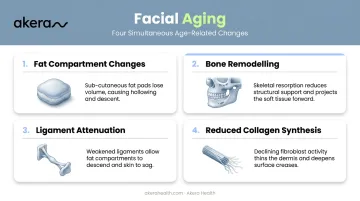
The supported clinical model points to several simultaneous changes:
- Fat compartment changes — buccal and nasolabial fat decreases; some compartments redistribute rather than simply deflate
- Bone remodelling — maxillary and orbital-rim resorption reduces the scaffold that supports overlying tissue
- Ligament attenuation — retaining ligaments that hold facial structures in place gradually loosen
- Reduced collagen synthesis — dermal thickness decreases over time
A 2026 cross-sectional 3D-MRI study of 47 women aged 18–65 confirmed these changes are heterogeneous — different compartments lose volume at different rates and in different directions. This is why a treatment plan effective for one patient may be entirely wrong for another at the same age.
How Apple Cheek Fillers Work
Restoring Volume Through Placement
Dermal fillers restore the anteromedial cheek by physically occupying space within the tissue and, in the case of hyaluronic acid (HA), binding water to maintain that volume. The result is an immediate anterior lift that also softens nasolabial folds and the eyelid-to-cheek transition.
A skilled injector doesn't simply add volume — they assess the ogee curve, the smooth S-shaped contour running from the lower eyelid toward the nasolabial fold. Age-related flattening of this curve is a key planning marker. Precise placement along this contour produces results that look proportionate rather than overfilled.
Apple Cheek vs. Lateral Cheek Technique
These two approaches are related but distinct:
| Target | Result | Technique |
|---|---|---|
| Anteromedial cheek (apple cheek) | Soft, round mid-face fullness | Deep medial-cheek fat / medial SOOF injection |
| Lateral cheek (cheekbone) | Sculpted, defined lateral projection | Lateral SOOF over the zygoma |
Many practitioners combine both for comprehensive mid-face rejuvenation. For some Asian facial structures, mid-face guidelines recommend treating the anteromedial cheek before the zygomatic arch to avoid creating unwanted lateral width.
The choice of filler material matters just as much as placement — which is why understanding how these products actually work helps set realistic expectations.
How HA Fillers Actually Work
Cross-linked HA gels bind tissue fluid and occupy space within the soft tissue. The hydrated gel expands and supplies mechanical volume through controlled, hygroscopic (moisture-attracting) behaviour within the injected area — not unlimited water absorption. The effect is predictable and, importantly, reversible with hyaluronidase if needed.
Key properties that make HA well-suited for apple cheek augmentation:
- Provides immediate volume with natural-feeling results
- Adjustable post-treatment if correction is needed
- Gradually metabolised by the body over 12–18 months
- Some formulations stimulate mild collagen production alongside volume restoration
Types of Fillers for Apple Cheeks
Hyaluronic Acid (HA) Fillers
HA fillers are the most commonly used option for apple cheeks. They're biocompatible, immediately effective, and — critically — reversible using hyaluronidase if needed.
- Common brands: Juvederm Voluma XC (FDA-approved for deep cheek injection since 2013), Restylane Lyft with Lidocaine (FDA-approved for cheek augmentation since 2015)
- Voluma longevity: 67.1% of pivotal-study subjects still showed improvement at 24 months
- Restylane Lyft: Cheek-specific follow-up through 12 months in regulatory studies
- Best for: Patients wanting natural, reversible volume with the option to adjust
Calcium Hydroxylapatite (CaHA) Fillers
CaHA fillers (such as Radiesse) contain 30% CaHA microspheres in a 70% aqueous gel carrier. The carrier provides immediate volume; the microspheres support fibroblast activity and new collagen formation over time.
- Not reversible with hyaluronidase
- Best for: Patients needing structural lift and definition rather than soft volume alone
- Note: Radiesse's US FDA label covers facial wrinkles and folds — confirm current product indications with your practitioner before treatment
Poly-L-Lactic Acid (PLLA) Fillers
PLLA fillers (such as Sculptra) work differently — they're biostimulatory rather than volumizing. Rather than adding immediate bulk, they trigger the body to build new collagen gradually over weeks, with results developing across multiple sessions.
- Sculptra received FDA approval in 2023 for correction of fine lines and wrinkles in the cheek region
- Results can persist through 24 months following a regimen of up to four monthly sessions
- Not reversible with hyaluronidase
- Best for: Patients seeking gradual, natural-looking improvement who are comfortable with a multi-session approach
Choosing the Right Filler
Each filler type addresses a different underlying concern — which means the right choice is highly specific to your anatomy and goals. Key factors your dermatologist will assess include:
- Degree of volume loss and facial anatomy
- Whether the goal is soft fullness, structural lift, or collagen rebuilding
- Reversibility preference
- Your dermatologist's clinical assessment
A thorough in-person consultation — where a dermatologist can evaluate your facial structure and discuss your expectations — is the only reliable way to identify which filler fits your case.
The Apple Cheek Filler Procedure: What to Expect
Consultation
This is the most important step. A thorough consultation covers:
- Facial anatomy assessment — bone structure, existing fat compartment changes, skin quality
- Aesthetic goal discussion — what outcome you're seeking and whether it's realistic
- Medical history review — allergies, current medications, autoimmune conditions, pregnancy/breastfeeding status
- Filler selection — type and volume appropriate to your anatomy
At Akera Health, Dr. Lavina Mittal (MBBS, MD) conducts personalised assessments for each patient before recommending any treatment. Her assessments factor in individual genetics, lifestyle, and skin profile to arrive at a treatment plan that suits each patient specifically.
Pre-Treatment Preparation
A few simple steps before your appointment can meaningfully reduce bruising and improve your results:
- Avoid non-essential NSAIDs and aspirin for 5–7 days before treatment to reduce bruising risk (do not stop prescribed anticoagulants without consulting your prescribing physician)
- Skip alcohol in the 24 hours prior
- Stay well hydrated in the days leading up to your session
- Arrive with a clean face — no makeup
Postpone treatment if you have an active skin infection or inflammation in the treatment area.
The Injection Session
Most sessions move through four straightforward stages:
- Skin is cleansed and the treatment area is mapped
- Topical numbing cream or a lidocaine-containing filler is applied (Juvéderm Voluma and Restylane Lyft both contain 0.3% lidocaine)
- Filler is injected into targeted areas using a fine needle or cannula
- Light massaging follows to ensure even distribution
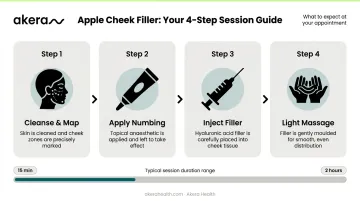
The Cleveland Clinic notes that cheek filler sessions can range from 15 minutes to 2 hours depending on assessment, preparation, and treatment extent. Results from HA and CaHA fillers are often visible immediately.
Immediately After
Expect the following in the first few days:
- Mild swelling, redness, and tenderness at injection sites — these are common and temporary
- Fillers take 1–2 weeks to fully settle; PLLA results develop over several weeks
- Avoid touching or pressing the treated area
- Skip strenuous exercise for 24–48 hours
- Stay out of direct sun and avoid extreme heat (saunas, steam rooms)
- Sleep on your back to avoid displacement pressure
Results, Longevity, and Aftercare
What Results Look Like
Most patients see an immediate lift and volume restoration in the mid-face, with softening of nasolabial folds and a more rested appearance. Final results become clearer as swelling resolves over 1–2 weeks. PLLA results build progressively across sessions.
How Long Results Last
| Filler Type | Verified Duration |
|---|---|
| HA (Voluma) | 67.1% improved at 24 months in pivotal study |
| HA (Restylane Lyft) | Cheek-specific data through 12 months |
| PLLA (Sculptra) | Improvement data through 24 months post-regimen |
| CaHA | Immediate effect; precise cheek longevity varies by product |
Individual metabolism, lifestyle, and filler volume all influence how long results last. Maintenance top-up sessions extend and sustain outcomes.
Aftercare That Protects Your Results
- Apply SPF daily — UV exposure accelerates skin ageing and degrades filler results faster
- Stay out of saunas and steam rooms for the first 2 weeks post-treatment
- Keep skin hydrated inside and out; well-hydrated tissue holds HA fillers longer
- Limit smoking and alcohol, both of which accelerate facial ageing and reduce longevity
- Keep your follow-up appointments so your practitioner can monitor and maintain results
Pairing apple cheek fillers with under-eye fillers, anti-wrinkle injections, or skin boosters tends to produce noticeably better overall facial balance than any single treatment alone. At Akera Health, Dr. Mittal can walk you through which combinations make sense for your face during your consultation.
Risks, Side Effects, and Who Should Avoid Fillers
Common Temporary Side Effects
Clinical study diaries give a clear picture of how common post-injection reactions are:
- Tenderness: 92.1% (Voluma) and 95% (Restylane Lyft) of diary participants
- Swelling: 85.7% (Voluma) and 90% (Restylane Lyft)
- Bruising: 77.7% (Voluma) and 82% (Restylane Lyft)
These figures come from solicited diaries in controlled studies — not population-wide complication rates. Most reactions resolve within 6–14 days. They're expected and manageable, particularly when treated by an experienced practitioner.
Rarer but Serious Risks
- Asymmetry — may require correction with additional filler or hyaluronidase
- Infection — rare when proper sterile technique is used
- Allergic reaction — identified during pre-treatment consultation
- Vascular occlusion — accidental filler entry into a blood vessel; the most serious risk, potentially causing tissue damage or, very rarely, vision complications
No reliable cheek-specific occlusion rate exists in the research literature. Across all facial injection sites, one cohort study estimated approximately one occlusion per 6,410 needle syringes — and injectors with more than five years' experience had 70.7% lower odds of occlusion. Choosing a provider with five-plus years of injection experience meaningfully reduces your risk.
HA fillers carry one significant safety advantage: vascular occlusion from HA can be treated with prompt high-dose hyaluronidase. CaHA and PLLA fillers are not reversible by this method.
Who Should Avoid Apple Cheek Fillers
- Pregnant or breastfeeding individuals (safety not established)
- Those with active skin infections or inflammation in the treatment area
- People with known allergies to filler components, including lidocaine
- Individuals with bleeding disorders (contraindicated for some products)
- Those with certain autoimmune conditions — discuss this explicitly during consultation
Sharing your complete medical history during consultation is what allows your practitioner to confirm suitability safely. If you're considering apple cheek fillers in Bengaluru, book a consultation at Akera Health — Dr. Lavina Mittal will assess your candidacy before any treatment proceeds.
Frequently Asked Questions
How do you get apple cheeks with filler?
A qualified dermatologist injects a dermal filler — typically HA or CaHA — directly into the anteromedial mid-face using precise placement techniques to restore volume and recreate natural fullness. A consultation is always the first step to determine the right approach for your facial anatomy.
What is the best filler for apple cheeks?
The best option depends on your anatomy and goals. Common choices include:
- HA fillers (Juvederm Voluma, Restylane Lyft) — natural-looking, reversible volume
- CaHA fillers — stronger structural lift
- PLLA (Sculptra) — gradual collagen rebuilding with longer-lasting results
A dermatologist will recommend the right fit based on your facial structure and desired outcome.
Are plump apple cheeks considered attractive?
Plump apple cheeks signal youth and facial harmony — they form a key part of the Triangle of Youth structure. The goal should always be natural-looking enhancement proportionate to your features, not maximum volume.
How long do apple cheek fillers last?
HA fillers typically last 12–24 months depending on the product; PLLA results can persist for up to 24 months after completing a full treatment regimen. Individual metabolism and lifestyle also play a role. Top-up sessions help maintain results.
Do apple cheek filler injections hurt?
Discomfort is minimal. Most practitioners apply topical numbing cream beforehand, and leading HA fillers contain 0.3% lidocaine. Patients typically feel a slight pinch or pressure during injection, with mild tenderness resolving within a few days.
What's the difference between apple cheek fillers and cheekbone fillers?
Apple cheek fillers target the round, fleshy anteromedial mid-face for soft, youthful fullness. Cheekbone fillers are placed along the zygomatic arch for lateral projection and definition. Many practitioners address both areas together for balanced, natural results.