
Introduction
You've tried the pharmacy gel. You've applied it for weeks. The wart is still there — maybe slightly smaller, maybe exactly the same. At some point, home remedies stop being a reasonable strategy and professional intervention becomes the smarter call.
Cauterization is one of the most clinically established approaches to wart removal. It works by using heat, extreme cold, or chemical agents to destroy wart tissue at the source — no scalpel required. For warts that resist over-the-counter treatments, it's often the most direct path to clearance.
This article covers what cauterization actually involves, the different methods available, who benefits most from professional treatment, and what recovery looks like — so you can make an informed decision about your next step.
Key Takeaways
- Cauterization destroys wart tissue using heat, cold, or chemical agents — not surgery
- Three main methods: electrocautery/RF cautery, cryosurgery, and chemical cauterization
- Professional treatment is recommended when home remedies fail, or warts are painful, spreading, or in sensitive areas
- Healing typically takes 2 weeks or longer depending on the site treated
- Warts can recur after cauterization because no treatment fully eliminates HPV from the body
What Is Cauterization for Warts?
The NCI defines cauterization as destroying tissue using a hot or cold instrument, an electrical current, or a chemical that burns or dissolves tissue. Applied to wart treatment, this means eliminating the infected skin growth without cutting it out with a scalpel.
Warts are benign skin growths caused by HPV. According to NIH clinical data, they affect approximately 10% of the general population and 10–20% of school-aged children — figures that explain why wart removal is one of the most frequently requested dermatological procedures.
Why HPV Complicates Removal
Cauterization removes the visible wart, but it doesn't eradicate HPV from the body. Clinically, treatment can reduce HPV infectivity but cannot fully clear the virus from the body. Recurrence is possible, which is why follow-up after treatment matters.
Which Wart Types Are Treated
Cauterization is used for most common cutaneous wart types:
- Common warts — typically on hands and fingers
- Plantar warts — on the soles of the feet, often painful
- Flat warts — smooth, skin-colored growths, often on the face or legs
- Filiform warts — thread-like projections, common around the nose and mouth
- Periungual warts — around or under fingernails and toenails
Genital warts require a separate clinical evaluation and are treated through different protocols. If you're unsure whether a growth is a wart or something else (a mole, for example), always get a professional diagnosis before pursuing any treatment.
Understanding what type of wart you have is the first step — the next is knowing which cauterization method is best suited for it.
Types of Wart Cauterization Methods
Electrocautery and RF Cautery
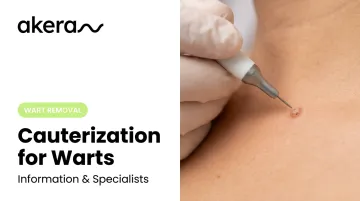
Electrocautery uses electrically generated heat (delivered through a fine probe or wire loop) to burn and destroy wart tissue. RF (radiofrequency) cautery works on the same principle but uses high-frequency radio waves rather than direct electrical resistance heat. Both methods offer precision, minimal blood loss (the heat seals vessels during the procedure), and are performed under local anesthesia.
At Akera Health, RF cautery is the primary documented method for wart removal. The procedure uses a handheld, pen-like device with an electrode tip that precisely targets the lesion while sterile technique is maintained throughout.
A 2021 study involving 60 patients with common, plane, palmar, and plantar warts found that RF ablation achieved a 6.67% recurrence rate at 6 months, with 15% of patients requiring additional ablation during the same session based on dermoscopic assessment.
- Best suited for: Small-to-medium warts
- Sessions: Often completed in one visit
Electrocoagulation
Rather than a cutting motion, an electrode conducts current into the tissue, generating intense localized heat that coagulates and destroys the wart from within. This approach is typically reserved for deeper or more firmly embedded warts where surface-level destruction isn't sufficient.
Cryosurgery (Cold Cauterization)
Liquid nitrogen (reaching temperatures as low as -196°C) is applied to the wart. Ice crystals form within the cells, destroying them through a combination of osmotic injury and microvascular damage. The dead wart typically separates from surrounding skin within days to weeks.
Cryosurgery is well-researched. One comparison study of plantar warts found 73.3% clearance after clinical cryotherapy at 6 weeks. At-home cold sprays exist, but a cryoprobe in a clinical setting offers greater precision and penetration depth.
Chemical Cauterization
Salicylic acid and lactic acid work by chemically breaking down wart tissue layer by layer — a keratolytic rather than thermal process, though often grouped under the cauterization umbrella.
OTC products typically contain 5–40% salicylic acid and require daily application for weeks. A Cochrane review confirmed salicylic acid is more effective than placebo for cutaneous warts, but adherence is the main challenge. Important restrictions:
- Not for use near eyes, mouth, nose, or genitals
- Requires a barrier cream on surrounding healthy skin
- Product labeling prohibits use on facial or mucous-membrane areas
- Children under 12 require adult supervision; avoid in children under 2
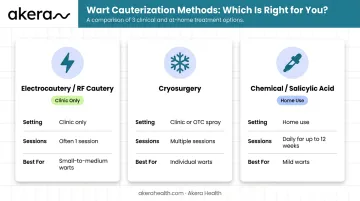
Method Comparison at a Glance
| Method | Setting | Sessions Typically Needed | Best For |
|---|---|---|---|
| Electrocautery / RF Cautery | Clinic only | Often 1 | Small-to-medium warts; precise removal |
| Cryosurgery | Clinic (or OTC spray, less effective) | Multiple | Individual warts; good evidence base |
| Chemical (salicylic acid) | Home | Daily for up to 12 weeks | Mild warts; motivated patients |
Who Is a Good Candidate for Wart Cauterization?
Ideal Candidates
Professional cauterization is the right choice when:
- OTC treatments have failed after several weeks of consistent use
- The wart is painful — plantar warts in particular can interfere with walking and daily movement
- Warts are on the face and affecting appearance or confidence
- Multiple warts are spreading
- The wart bleeds or gets irritated regularly
Clinical guidelines — including those from the American Academy of Dermatology — recommend seeing a dermatologist when self-treatment fails, when warts are numerous, when a lesion changes or bleeds, or when immune suppression is a factor.
When Professional Treatment Is Essential
Some situations make at-home treatment genuinely inadequate:
- OTC products don't reach the depth needed for large or deeply embedded warts
- Warts near the eyes, under nails, or in the genital area require clinical precision that home treatment can't provide
- Patients with weakened immune systems often develop more persistent or widespread warts that need a tailored clinical approach
- If you're unsure the growth is a wart, see a dermatologist before attempting any treatment — some lesions that resemble warts require very different care
Contraindications to Be Aware Of
- Chemical cauterization is not appropriate for young children or sensitive skin areas
- Patients on blood thinners should inform their provider before any heat-based procedure
- Anyone with diabetes or poor circulation should avoid salicylic acid-based treatments — clinicians generally advise against it due to impaired healing and infection risk
What to Expect: Before, During, and After the Procedure
Preparing for the Procedure
Preparation is straightforward for most wart removal appointments:
- Eat normally beforehand — no fasting required
- Wear loose clothing that allows easy access to the treatment area
- Bring a list of current medications, especially blood thinners
- No sedation is typically needed, so driving yourself is generally fine
Confirm with your provider whether any medications need to be paused temporarily.
During the Procedure
The treatment area is cleaned first, then local anesthesia (topical or injected) is administered to numb the skin. The chosen cauterization method is then applied: RF probe, cryoprobe, or chemical agent.
Most patients feel mild pressure or a warmth sensation but not significant pain with proper anesthesia. The actual wart destruction is brief. What matters before that point is an accurate pre-treatment assessment — one that determines the right method based on wart type, location, and individual skin profile. At Akera Health in Bengaluru, this assessment is part of every wart removal appointment, helping minimize risks like scarring or pigmentation changes.
Immediately After
Expect redness, mild swelling, and a small wound at the treated site. A scab typically forms within 24–48 hours. The wart tissue is gone, but the skin needs time to regenerate. Healing takes 2 weeks or longer depending on the site, per DermNet — larger treatment areas generally take longer.
Recovery and Aftercare Following Wart Cauterization
Wound Care Essentials
- Clean the area daily with mild soap and water
- Cover with a clean bandage if the site is exposed to friction or dirt
- Once the scab has naturally separated, apply a dexpanthenol-based ointment — a 2020 clinical review found evidence supporting topical dexpanthenol in post-procedure wound healing
- Do not pick at scabs — doing so is the primary cause of scarring and infection after cauterization
Activity and Lifestyle During Recovery
- Protect the treated area from direct sun exposure to reduce discoloration risk — the IJDVL RF guideline specifically recommends sunscreen on treated sites, noting that hyperpigmentation is more common in Indian skin tones
- Wear flip-flops in shared spaces if a plantar wart was treated, to reduce reinfection risk
- Avoid sexual activity if warts were in a sensitive location until fully healed
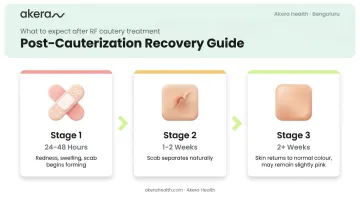
Recovery Timeline
| Timeframe | What to Expect |
|---|---|
| 24–48 hours | Redness, swelling, scab begins forming |
| 1–2 weeks | Scab separates naturally |
| 2+ weeks | Skin gradually returns to normal color; may remain slightly pink |
Most patients resume daily activities within 24 hours. If you're unsure about how your skin is healing — or if redness, swelling, or discharge persists beyond a few days — a dermatologist can assess the site and rule out infection before it becomes a problem.
Risks and Limitations to Know Before Treatment
Common Risks
Study-specific complication data from one plantar wart comparison provides useful context (note: the analyzed groups were small and all-male, so these figures should not be generalized):
| Complication | Electrodessication | Clinical Cryotherapy |
|---|---|---|
| Infection | 6.2% | 0% |
| Scarring | 33.3% | 6.7% |
| Dyspigmentation | 8.3% | 15.0% |
| Recurrence at 24 weeks | 21.9% | 16.6% |
Sterile technique and proper aftercare reduce infection risk. Scarring risk increases with larger treatment areas. People with darker skin tones are more prone to discoloration, though it typically fades on its own.
The Key Limitation: Recurrence
Neither electrocautery nor cryosurgery eliminates HPV from the body. If viral particles remain in surrounding tissue — or if the patient is re-exposed to HPV — warts can return. A dermatologist check-in around 4–6 weeks after treatment helps catch any regrowth before it becomes harder to treat.
Warning Signs Requiring Prompt Attention
Contact your treating provider immediately if you notice:
- Persistent or heavy bleeding after the first 24 hours
- Increasing redness, warmth, or swelling suggesting infection
- Pus or fever
- Severe pain not controlled by OTC pain relievers
- Unexpected changes in the treated area
Frequently Asked Questions
Is electrocautery for warts painful?
The procedure is performed under local anesthesia, making it well-tolerated for most patients. You may feel mild pressure during the process. Soreness or tenderness over the following few days is normal and manageable with standard OTC pain relievers.
Does cauterizing a wart work?
Yes — cauterization is clinically effective at destroying wart tissue. However, it does not eliminate the underlying HPV virus, so recurrence is possible. Success rates are higher when treatment is performed by a qualified dermatologist.
What kills warts permanently?
No treatment permanently eliminates HPV from the body. Professional cauterization combined with a strong immune response offers the best chance of long-term clearance — though good hygiene, avoiding re-exposure, and follow-up appointments all reduce recurrence risk.
How long does a wart take to heal after cauterization?
Healing typically takes 2 weeks or longer depending on wart size and location. A scab forms within 1–2 days and separates naturally as the skin recovers.
Can warts come back after cauterization?
Recurrence is possible because cauterization removes the visible wart but not residual HPV in surrounding skin. Monitoring the treated area and scheduling a dermatologist follow-up helps catch regrowth early.
What type of doctor performs wart cauterization?
Dermatologists are the most qualified specialists. They can accurately diagnose wart type, select the most appropriate method, and minimise risks like scarring or discolouration — especially important for warts in visible or sensitive areas.