Morpheus8 has become one of the most discussed treatments in advanced aesthetics, and for good reason. It combines two clinically established technologies into one procedure that works deeper than most non-surgical alternatives. But there's also a lot of noise around it — overpromised results, unclear recovery expectations, and confusion about who it actually helps.
This article cuts through that. Here are seven essential things to know before deciding if Morpheus8 is right for you.
Key Takeaways
- Morpheus8 combines microneedling with radiofrequency energy to stimulate collagen deeper than standard microneedling
- Treats skin laxity, acne scars, fine lines, and enlarged pores; visible results develop gradually over several weeks
- Suitable for all Fitzpatrick skin types, including darker South Asian skin tones
- Most patients need 2–3 sessions; downtime is typically 3–5 days
- Provider skill and device quality directly affect both safety and results
What Is Morpheus8 and How Does It Work?
Morpheus8 is a fractional radiofrequency (RF) microneedling device made by InMode. It combines two proven techniques: microneedling (fine needles that create controlled micro-injuries in the skin) and radiofrequency energy (heat delivered precisely into the dermis). Together, they stimulate the skin's collagen and elastin production simultaneously.
What Makes It Different From Standard Microneedling
The key differentiator is depth. Standard microneedling stimulates collagen near the skin's surface. Morpheus8's insulated needles penetrate to 1–4 mm, as confirmed in peer-reviewed research, delivering RF energy to the deeper dermis and, in some settings, the subdermal layer. The needle insulation is critical — it protects the skin surface while concentrating heat precisely where it's needed.
The device works in a fractional pattern, treating discrete columns of tissue while leaving surrounding skin intact. This supports faster healing and more significant collagen remodelling compared to treatments that affect the entire skin surface at once.
Why RF Energy Matters for Indian Skin
That fractional, heat-based mechanism also makes Morpheus8 particularly well-suited for South Asian and darker skin tones (Fitzpatrick types IV–VI) — because RF energy is colour-blind. It targets tissue heat, not melanin, which means it carries a lower risk of post-inflammatory hyperpigmentation (PIH) compared to certain ablative laser treatments. A 2025 retrospective study including Fitzpatrick I–VI patients reported no pigmentary complications across the treatment cohort.
What Skin Concerns Can Morpheus8 Address?
Morpheus8 works across a wide range of concerns, but its results vary depending on what you're treating. Here's where it performs strongly — and where other treatments may be a better fit.
Strong candidates for Morpheus8:
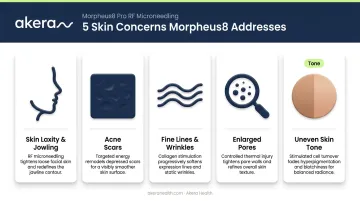
- Skin laxity, jowling, and neck looseness — RF-induced collagen remodelling firms loose skin along the jawline, jowls, cheeks, and upper neck
- Acne scars — particularly boxcar scars, where research supports strong response to Morpheus8 alone; rolling scars with deeper tethering typically require additional subcision
- Fine lines and wrinkles — collagen and elastin production smooths surface lines over time, without the frozen effect associated with injectables
- Enlarged pores and uneven texture — as collagen tightens the surrounding skin, pores appear smaller and surface texture improves
- Uneven skin tone and mild surface dullness — the micro-injury response triggers skin renewal that can improve overall radiance and surface uniformity over successive sessions
What it's not designed for:
- Severe hyperpigmentation or deep sun damage — laser toning protocols (such as Q-switched Nd:YAG) are better suited for targeted pigmentation correction
- Significant structural sagging — advanced tissue descent requires surgical correction that RF microneedling cannot replicate
- Active skin infections or inflamed acne lesions — treatment must be deferred until the skin has cleared to avoid spreading infection or worsening inflammation
Who Is the Right Candidate?
The Ideal Profile
Morpheus8 suits adults generally from their mid-20s onward, though it's most commonly sought by those in their 30s–50s experiencing:
- Mild to moderate skin laxity
- Acne scarring (particularly boxcar type)
- Uneven texture or enlarged pores
- Early lines and loss of skin firmness
It's suitable for all skin types, making it a strong option for the predominantly South Asian patient base served by clinics across Bengaluru.
Who Should Consult a Dermatologist First
Certain individuals need a careful clinical assessment before proceeding:
- Those with active skin infections or open acne lesions
- Patients on anticoagulants (blood thinners), who need physician clearance
- Pregnant women — treatment is generally deferred until after pregnancy
- Those with a history of keloid scarring — while not a blanket exclusion, this warrants an in-depth discussion with a dermatologist
At Akera Health, Dr. Lavina Mittal (MBBS, MD) conducts pre-treatment consultations that factor in skin type, genetics, lifestyle, and the specific concern before recommending Morpheus8 Pro. Sessions start from ₹10,000, and the first step is always a formal skin analysis.
To book a consultation, visit akerahealth.com.
What to Expect: Before, During, and After
Before the Treatment
Standard preparation typically includes:
- Avoiding direct sun exposure for 1–2 weeks prior
- Discontinuing actives like retinol, AHAs, and BHAs for a few days before the session
- Staying well hydrated and disclosing any medications or health conditions to your provider
- Arriving 30–45 minutes early for topical numbing cream application
During the Session
The device is stamped across the face in a controlled fractional pattern. With numbing cream applied, most patients describe the sensation as warm pressure or mild tingling — not significant pain. Some areas near the ears or chin tend to be more sensitive. The facial treatment typically takes around 30–45 minutes.
At Akera Health, a five-step protocol is followed: skin analysis → numbing → device application → RF energy delivery → anti-inflammatory mask (applied in-clinic immediately after the session to reduce redness and swelling).
Immediately After and Recovery
What to expect post-treatment:
- Redness, mild swelling, and tiny pinpoint marks are normal for 2–4 days
- Grid marks (if they appear) generally resolve within 1–2 weeks
- Avoid makeup for at least 24–48 hours
- Use only gentle cleansers and moisturizers during recovery
- Apply SPF daily — treated skin is more sensitive to UV exposure
Most patients resume normal activities within 3–5 days.
When Results Appear and How Many Sessions Are Needed
An initial glow may be visible within the first few days, but meaningful improvement — tighter skin, smoother texture, reduced scarring — typically develops over 4–6 weeks as collagen rebuilds. Full remodelling results, particularly for skin tightening, can take up to three months.
Typical session guidelines:
- Mild texture concerns: 1 session may deliver noticeable improvement
- Skin laxity or moderate scarring: 2–3 sessions spaced 4–6 weeks apart
- Deeper concerns: protocol determined at consultation based on severity
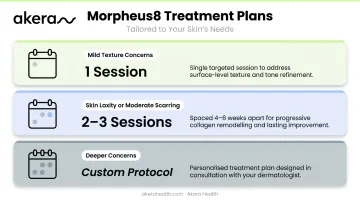
Your dermatologist will map out the right plan during your initial skin analysis.
How Long Do Results Last — and How to Maintain Them?
Results from Morpheus8 generally last in the range of 12–18 months, though this varies based on age, skin condition, lifestyle, and post-treatment care habits. The collagen remodelling process continues for months after treatment — meaning results often improve before they gradually fade.
Practical steps that support longevity:
- Apply SPF 50+ daily — the most important habit for protecting treated skin and slowing premature breakdown of results
- Reintroduce retinol and Vitamin C gradually after full healing, as part of a dermatologist-recommended routine
- Stay consistently hydrated and limit prolonged sun exposure
- Book annual maintenance or booster sessions as your provider advises
Morpheus8 works best when treated as part of an ongoing skin health routine rather than a standalone procedure. Akera Health's SPF 50+ sunscreens — available for oily/combination, normal, and dry/sensitive skin — are a straightforward option for this kind of daily post-treatment care.
Morpheus8 vs. Other Treatments — and Why Provider Choice Matters
Morpheus8 vs. Traditional Microneedling
Traditional microneedling creates surface-level micro-injuries to stimulate collagen. Morpheus8 adds RF energy delivered at controlled depths — making it more effective for skin laxity, deeper scars, and structural remodelling. Results are generally more dramatic and longer-lasting than standard microneedling alone.
Morpheus8 vs. Surgical Facelift
Published comparative data suggests approximately 49% improvement in skin laxity after surgical facelift versus 16% after fractional bipolar RF. Surgery offers more dramatic correction for significant structural sagging. Morpheus8 is best described as a preventive or bridge treatment — ideal for patients in their 30s and 40s who want to maintain skin quality before more invasive options become necessary.
Which path is right depends on the degree of laxity and the patient's goals — and that's precisely where the provider's expertise becomes decisive.
Why the Provider Matters
The FDA has reported burns, scarring, fat atrophy, disfigurement, and nerve damage associated with RF microneedling when performed incorrectly. Peer-reviewed literature identifies user error as the leading complication risk.
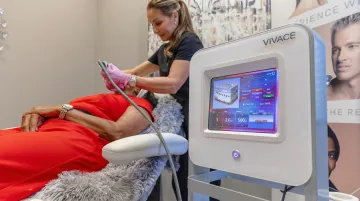
Depth settings, energy levels, and technique must be calibrated to the individual. Incorrect parameters — can cause irreversible fat loss or scarring. Choose a clinic where Morpheus8 is performed or directly supervised by an MD-qualified dermatologist, not delegated entirely to a technician.
Akera Health uses the Morpheus8 Pro — the higher-powered variant with a larger applicator for faster, more consistent coverage — with all treatments supervised by Dr. Lavina Mittal. With 3,000+ clients served and a 4.9/5 Google rating, the results speak for themselves.
Frequently Asked Questions
What does Morpheus8 do to your face?
Morpheus8 uses RF microneedling to stimulate collagen and elastin production in the deeper dermis, resulting in firmer, smoother skin. Over several weeks, patients typically see reduced acne scars, softer fine lines, and improved overall skin texture and tone.
How long does Morpheus8 last?
Results are generally maintained for 12–18 months, though this varies with age, lifestyle, and post-treatment skincare habits. Collagen remodelling continues for months after the final session, so results typically peak around the 3–6 month mark before gradually fading.
Is Morpheus8 better than a facelift?
They serve different purposes. Morpheus8 is a non-surgical option well-suited to mild-to-moderate skin laxity, while a facelift offers more significant structural correction for substantial sagging. The right choice depends on the degree of concern and individual goals.
What is the best age for Morpheus8?
Morpheus8 is suitable from the mid-20s onward, but is most commonly sought by those in their 30s–50s experiencing early-to-moderate signs of ageing. That said, the right timing depends less on age and more on your specific skin condition — a dermatologist can confirm whether you're a good candidate.
How many Morpheus8 sessions are needed for the face?
Most patients require 2–3 sessions spaced 4–6 weeks apart for optimal results. Some concerns respond well to a single session, while more significant laxity or scarring may benefit from additional treatments. Your dermatologist will recommend the right number of sessions after evaluating your skin.
Is Morpheus8 painful?
With topical numbing cream applied 30–45 minutes beforehand, most patients experience only mild warmth or pressure during the session. There's no significant pain post-treatment — the skin may feel slightly sunburned for a day or two.