Introduction
You've spotted stubborn pigmentation on your cheeks — or maybe you're tired of razors and waxing. You start researching laser treatments and immediately hit a wall of acronyms. "Nd:YAG" appears everywhere, but what does it actually mean for your skin?
Nd:YAG is one of dermatology's most clinically validated lasers, used across conditions ranging from melasma and unwanted hair to vascular lesions and acne scars. For Indian skin tones specifically, it holds particular relevance: its 1064 nm wavelength is better tolerated by medium-to-darker complexions than most alternatives — a meaningful distinction given how common post-inflammatory hyperpigmentation and melasma are across South Asian skin.
This guide covers how the laser works, which conditions it treats, what the evidence says about results, what to expect during treatment, and who it's best suited for.
Key Takeaways
- Nd:YAG operates at 1064 nm, penetrating deeper than most dermatological lasers with comparatively lower risk for darker skin tones
- Two modes serve different purposes: long-pulse for hair and vessels, Q-switched for pigment and tattoos
- Results vary meaningfully by condition — hair reduction averages 54–73%, not a guaranteed 80–90%
- Melasma typically needs around 10 sessions and carries high recurrence rates — it can be managed, not permanently cured
- Treatment safety depends on the dermatologist's calibration; choosing the right clinic is as critical as choosing the right laser
What Is an Nd:YAG Laser and How Does It Work?
The Technology in Plain Terms
Nd:YAG stands for Neodymium-doped Yttrium Aluminium Garnet — a synthetic crystal that acts as the laser's active medium. When energised, it produces a concentrated beam of near-infrared light at 1064 nm. The crystal determines the wavelength, and the wavelength determines what the laser can do inside your skin.
The beam targets specific chromophores — biological structures that absorb light at particular wavelengths. In practice, this means melanin (in hair follicles and pigmented spots) and haemoglobin (in blood vessels) absorb the laser's energy and convert it to heat. That heat damages only the targeted tissue — leaving surrounding healthy skin largely unaffected — through a process called selective photothermolysis.
Two Modes, Two Different Jobs
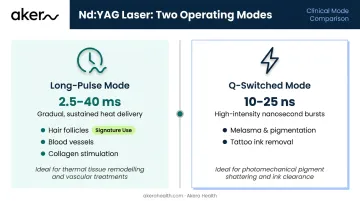
The same laser platform operates in two distinct modes, each suited to different indications:
- Long-pulse mode (millisecond range, approximately 2.5–40 ms): Delivers heat gradually for deeper tissue effects. Used for hair removal, vascular lesions, and dermal collagen stimulation
- Q-switched mode (nanosecond range, approximately 10–25 ns): Fires extremely short, high-intensity bursts that shatter pigment particles rather than heat them. Used for melasma, pigmented lesions, and tattoo ink
Why 1064 nm Works Better for Indian Skin
Longer wavelengths scatter less as they travel through tissue, allowing the 1064 nm beam to reach deeper structures. Critically, melanin in the skin's surface absorbs 1064 nm light far less readily than shorter wavelengths — which means less competition between the laser and surface pigment. This gives the Nd:YAG a comparatively safer profile for Fitzpatrick Types III–VI skin, which are prevalent across India.
Compared to diode lasers or IPL systems, the Nd:YAG's deeper penetration and reduced epidermal melanin absorption make it the preferred option for darker skin tones. Key reasons it outperforms alternatives on Indian skin:
- Deeper penetration reaches follicles and dermal pigment without overheating the surface
- Lower epidermal melanin absorption reduces the risk of post-inflammatory hyperpigmentation
- Effective across a wider range of skin tones compared to diode or IPL platforms
That said, "safer" does not mean "risk-free" — treatment parameters still need to be tailored by a qualified dermatologist for each patient's skin type and concern.
What Skin and Hair Conditions Can Nd:YAG Laser Treat?
Laser Hair Removal
The long-pulse 1064 nm beam targets melanin in the hair follicle. The generated heat damages the follicle's growth structures, inhibiting future hair production. Among available laser options for hair removal, long-pulsed Nd:YAG is one of the few considered suitable for darker skin tones without high risk of surface burns or post-inflammatory hyperpigmentation (PIH).
Treatable areas include the face, underarms, bikini line, legs, back, and chest. Dark hair on any skin tone responds best; lighter hair yields less predictable results.
What to expect from results: A review of 150 Fitzpatrick Type IV–VI patients reported a mean reduction of 54.3% after an average of 8.9 sessions; a separate Type III–IV trial found 73.6% reduction at 18 months. Claims of 80–90% universal reduction are not supported by primary clinical data for this wavelength in darker skin.
Pigmentation and Melasma
Q-switched Nd:YAG mode targets excess melanin, shattering pigment clusters into smaller particles that macrophages (immune cells) then absorb and eliminate.
Akera Health's TriBeam Q-switched Nd:YAG laser is used for this purpose, with documented patient outcomes showing improvements in hyperpigmentation, freckles, and melasma — including a testimonial from patient Neeru Kaur specifically regarding melasma treatment.
Treatable conditions include:
- Melasma and freckles
- Age spots (solar lentigines)
- Post-inflammatory hyperpigmentation (acne marks)
- Naevus of Ota and café-au-lait macules
Important caveat on melasma: A 2022 systematic review found that melasma laser toning typically uses around 10 weekly or biweekly sessions, and recurrence rates at 3 months ranged from 64% to 100%. Melasma is manageable with laser toning — not permanently resolved by it. Ongoing maintenance and strict sun protection are non-negotiable.
Vascular Lesions
Long-pulse Nd:YAG targets hemoglobin in blood vessels. The absorbed heat causes vessels to coagulate and collapse while surrounding tissue remains unaffected. Treatable conditions include spider veins, telangiectasia, facial redness from rosacea, and hemangiomas.
Session counts vary considerably by condition — spider angiomas may clear in 3 sessions, facial telangiectasia averaged 5 in one study, and darker-skin hemangioma treatment required 6 monthly sessions. The "1–3 sessions" figure often cited online is not a universal benchmark.
Acne and Acne Scars
A randomised clinical study published in the Journal of the American Academy of Dermatology found that three dual-mode Nd:YAG treatments reduced inflammatory acne lesions by 58.6% and non-inflammatory lesions by 52.4%, alongside reduced sebum output — offering a non-antibiotic approach to active acne. A separate split-face study using four long-pulse sessions showed significant improvement in atrophic scar scores.
The dual mechanism: active acne benefits from sebaceous gland disruption and antibacterial effects, while scar improvement comes from collagen remodelling in the deeper dermis.
Skin Rejuvenation
Sub-ablative long-pulse Nd:YAG energy stimulates fibroblasts in the dermis to produce collagen and elastin. A human biopsy study reported a 45.1% reduction in mean wrinkle grade four weeks post-treatment, with histologically confirmed increases in collagen and elastic fibres.
Tattoo Removal
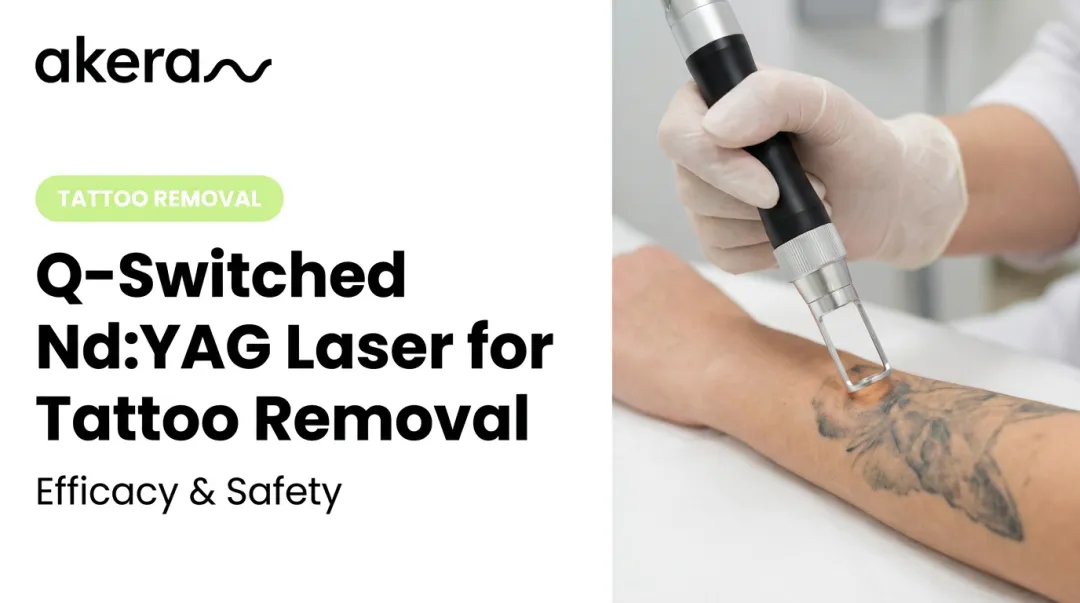
Q-switched 1064 nm breaks down black, blue, and dark grey ink particles. The frequency-doubled 532 nm mode addresses red and orange pigments — not all coloured inks respond equally, and this distinction matters when setting expectations. Session counts range from 2–11 in clinical cohorts, with professional tattoos potentially requiring 15–20 or more sessions.
Key Benefits of Nd:YAG Laser Treatment
Suitable for a Wider Range of Skin Tones
The 1064 nm wavelength's reduced epidermal melanin competition gives it a meaningful advantage in darker skin. A 2020 systematic review found PIH rates significantly favoured Nd:YAG over IPL in Fitzpatrick III–VI skin (OR 0.26). The risk isn't zero, but the difference is clinically meaningful — particularly for Indian patients who have previously been told certain lasers aren't safe for their skin tone.
Minimal Downtime
Most patients resume daily activities the same day or the day after. Mild redness, warmth, and swelling typically resolve within 24–72 hours. There's no wound, no peeling, and no extended recovery period in non-ablative mode — a meaningful difference from ablative resurfacing treatments.
Versatility Across Multiple Concerns
Beyond downtime, another practical advantage is how much a single platform can do. One system, multiple applications:
| Condition | Mode Used |
|---|---|
| Hair removal | Long-pulse 1064 nm |
| Pigmentation / melasma | Q-switched 1064 nm |
| Vascular lesions | Long-pulse 1064 nm |
| Acne / scar improvement | Long-pulse 1064 nm |
| Skin rejuvenation | Long-pulse 1064 nm |
| Tattoo removal | Q-switched 1064/532 nm |
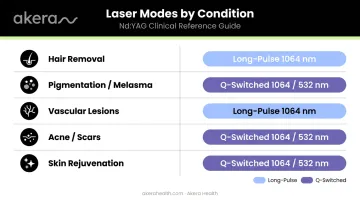
Patients with multiple concerns can address them on the same platform without switching systems or clinics. At Akera Health, the TriBeam Q-switched Nd:YAG is the primary laser platform for toning, pigmentation, and tattoo removal — all treatments supervised by Dr. Lavina Mittal, MBBS, MD.
What to Expect During Nd:YAG Laser Treatment
Before the Session
A dermatologist will assess your skin type, Fitzpatrick classification, the specific condition being treated, and relevant medical history. Patients are typically advised to:
- Avoid sun exposure and tanning for 2–4 weeks prior
- Stop retinoids and exfoliating actives as directed
- Disclose any medications (particularly photosensitising drugs) and recent cosmetic procedures
A topical anaesthetic may be applied 20–30 minutes before the session. Most patients describe the sensation as a mild snapping or warming feeling, and the majority tolerate it comfortably without anaesthetic. That said, comfort does vary by treatment area.
During and After the Session
During the procedure:
- Protective eyewear worn by both patient and practitioner
- A handheld device placed against the skin delivers calibrated laser pulses
- Built-in or external cooling reduces surface discomfort
- Session duration: approximately 10–60 minutes depending on the area treated
After the session, Akera Health's aftercare protocol includes applying an anti-inflammatory cream followed by broad-spectrum sunscreen, since post-laser skin is much more UV-sensitive than usual.
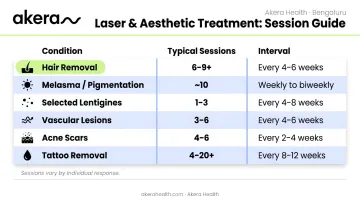
Indicative session numbers by condition (study-based benchmarks, not fixed packages):
| Condition | Typical Sessions | Interval |
|---|---|---|
| Hair removal | 6–9+ sessions | 4–6 weeks |
| Melasma / pigmentation | ~10 sessions (with maintenance) | Weekly to biweekly |
| Selected lentigines | 1–3 sessions | 4–8 weeks |
| Vascular lesions | 3–6 sessions | 4–6 weeks |
| Acne scar improvement | 4–6 sessions | 2–4 weeks |
| Tattoo removal | 4–20+ sessions | 8–12 weeks |
Side Effects and Safety: What You Should Know
Common, Temporary Effects
Most side effects are mild and short-lived:
- Redness, warmth, and swelling in the treated area (resolves within 24–72 hours)
- Temporary increased sun sensitivity
- Occasional bruising (reported in approximately 6.7% of patients in one mixed-hypermelanosis study — no large-scale routine incidence figure exists in current literature)
Less Common Risks
- Post-inflammatory hyperpigmentation (PIH): Reported in 10–14% of patients in some darker-skin cohorts, typically transient when aftercare is followed
- Hypopigmentation or mottled pigmentation: A risk with cumulative Q-switched treatment, particularly relevant for melasma protocols where excessive sessions can trigger rebound darkening
- Blistering: Rare, typically resolves without intervention
- Bacterial infection: Rare when proper aftercare is followed
These risks increase significantly when treatment is performed by untrained technicians using poorly calibrated settings. A qualified, experienced dermatologist is the single most important factor in keeping your treatment safe.
Who Should Approach with Caution
These are factors your dermatologist will screen for during consultation — not automatic disqualifiers:
- Pregnant women (current evidence supports postponing elective cosmetic laser treatments)
- Individuals on photosensitising medications (discuss with your dermatologist)
- Those with active skin infections in the treatment area
- People with a history of keloid scarring
- Anyone with recent significant sun exposure or tanning
A pre-treatment consultation helps your dermatologist assess these factors and adjust the protocol for your specific skin type and history.
Frequently Asked Questions
What is an Nd:YAG laser?
It's a solid-state laser using a neodymium-doped crystal to produce near-infrared light at 1064 nm. In dermatology, it's used across two operating modes — long-pulse and Q-switched — to treat a broad range of skin, hair, vascular, and pigmentation concerns.
What is an Nd:YAG laser used for?
Its main dermatological applications include laser hair reduction, pigmentation and melasma treatment, vascular lesion management, active acne and acne scar improvement, skin rejuvenation, and tattoo removal.
Does Nd:YAG laser remove hair permanently?
It delivers significant, long-lasting hair reduction — clinical studies in darker skin types report mean reductions of 54% to 73%, not the 80–90% figure often cited. Most patients need periodic maintenance sessions, and complete permanent removal is not a guaranteed outcome for everyone.
Is Nd:YAG laser treatment safe for dark or Indian skin tones?
The 1064 nm wavelength carries a lower risk of surface burns and PIH than shorter-wavelength lasers. A 2020 systematic review confirmed a meaningful safety advantage over IPL in Fitzpatrick III–VI skin, though outcomes still depend heavily on the treating dermatologist's experience and parameter calibration.
How many sessions of Nd:YAG laser are needed?
It varies significantly by condition. Hair removal typically requires 6–9+ sessions; melasma often needs around 10 sessions with ongoing maintenance; selected lentigines may respond in 1–3 sessions; vascular lesions typically need 3–6; and tattoos can require anywhere from 4 to 20+ depending on ink depth and colour.
What are the side effects of Nd:YAG laser treatment?
Common effects — redness, mild swelling, warmth — resolve within 24–72 hours. PIH and hypopigmentation are possible, particularly in darker skin types, but remain manageable when treatment is performed by a qualified dermatologist using appropriate settings and proper aftercare, including daily broad-spectrum sun protection.