Here's the honest truth: pores cannot be permanently closed. They are structural parts of your skin, essential for delivering sebum and regulating temperature. What can change is how noticeable they are — and this guide covers exactly how to do that, from daily skincare habits to clinical treatments available in Bengaluru.
Key Takeaways
- Large pores are driven by excess sebum, collagen loss, genetics, and clogging from dead skin or pollution
- Consistent use of retinol, niacinamide, and salicylic acid can visibly reduce pore visibility
- Clinical treatments like RF microneedling and chemical peels deliver deeper, longer-lasting results
- Daily sun protection matters: UV damage directly accelerates pore enlargement over time
- A dermatologist consultation ensures you target the actual root cause — not just manage the surface
Why Pores Enlarge: The Real Causes
Pores are small openings in the skin connected to sebaceous (oil) glands and hair follicles. They allow sebum and sweat to reach the skin's surface — a necessary biological function, not a cosmetic flaw.
A 2016 clinical review identifies three primary drivers of visible pore enlargement: high sebum output, reduced elasticity around the pore opening, and increased follicular volume. Genetics largely determines your baseline pore size, but several factors push pores beyond that baseline.
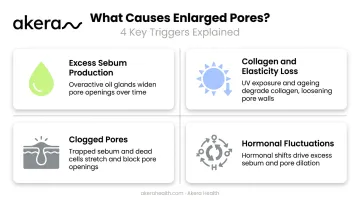
The Four Main Triggers
Excess sebum production — Overactive oil glands fill the pore with sebum, physically stretching its walls. This is the most common driver in oily and combination skin types and explains why enlarged pores are so prevalent in Bengaluru's climate.
Loss of collagen and elasticity — UV radiation activates enzymes (MMP-1, MMP-3, MMP-9) that break down extracellular-matrix collagen, reducing the skin's structural support around each pore opening. As this support weakens, pores appear more prominent. Daily broad-spectrum SPF directly slows this collagen loss — making it one of the few preventive steps with consistent clinical backing.
Clogged pores — Dead skin cells, makeup residue, and pollution accumulate inside pores, stretching the opening. When the plug oxidises, it darkens to form a blackhead — a visible sign of a congested, enlarged pore.
Hormonal fluctuations — Androgens stimulate sebaceous gland activity, increasing oil output and pore visibility. Patients with oily or acne-prone skin often see this play out most clearly during puberty, menstrual cycles, or hormonal shifts — which is also why pore concerns rarely have a single fix.
At-Home Skincare: What Actually Works
At-home treatments are most effective for mild-to-moderate pore visibility. They require consistency over several weeks — there are no overnight results here. The right combination of ingredients can make a measurable difference.
Cleanse Twice Daily with a Non-Comedogenic Formula
Cleansing removes excess oil, makeup, and debris that clog pores. Use lukewarm water — hot water irritates the skin and can make pores look more prominent. Non-comedogenic formulas are critical; products that clog pores will undo everything else in your routine.
Retinol at Night
Retinol, a Vitamin A derivative, accelerates cell turnover, prevents dead-skin buildup inside pores, and stimulates collagen production. This addresses two root causes at once: clogging and elasticity loss. Start with a low concentration applied at night and build tolerance gradually.
Note: Those who are pregnant or breastfeeding should avoid retinol entirely.
Salicylic Acid for Clogged Pores
Salicylic acid is a beta hydroxy acid (BHA) that works inside the pore — it dissolves the oil-and-dead-skin plug that causes the opening to stretch. It is particularly effective for oily and acne-prone skin. Depending on your sensitivity, it can be incorporated as a cleanser, toner, or serum.
Niacinamide Serum to Regulate Oil
Controlled studies show that 2% niacinamide reduces facial sebum production — the direct driver of pore enlargement in oily skin types. Beyond sebum control, niacinamide improves uneven skin texture and suits sensitive skin well, with a low irritation profile even at consistent daily use.
SPF Every Single Morning
A 903-adult randomised trial over 4.5 years found that daily broad-spectrum SPF 15+ use produced 24% less skin ageing than discretionary use. UV damage is one of the most preventable causes of collagen loss — and collagen loss directly worsens pore appearance. Use SPF 30 or higher every morning, including cloudy or indoor days.
If you have oily or combination skin, choosing the right SPF format matters as much as wearing it daily. Akera Health's SPF 50+ sunscreen for oily/combination skin uses a water-based, non-comedogenic formula designed not to block pores or add heaviness to an already sebum-prone complexion.
Clinical Treatments for Enlarged Pores
When a consistent at-home routine plateaus, clinical treatments offer deeper, more targeted solutions. Because Indian skin tones (Fitzpatrick types III–VI) carry a higher risk of post-inflammatory hyperpigmentation (PIH) with certain procedures, all treatments should be performed or supervised by a qualified dermatologist.
Chemical Peels
Chemical peels — using glycolic, salicylic, or mandelic acid — exfoliate deeper layers of skin, unclog pores, and stimulate collagen remodelling. A 2019 comparative study in 45 Asian patients comparing glycolic acid, salicylic-mandelic acid, and phytic acid peels found texture and pore improvement across all three formulations over six sessions.
At Akera Health, chemical peels use plant-based exfoliating solutions customised to individual skin type and concern, with sessions starting from ₹3,000. Multiple sessions are typically recommended for sustained results.
Morpheus8 Pro RF Microneedling
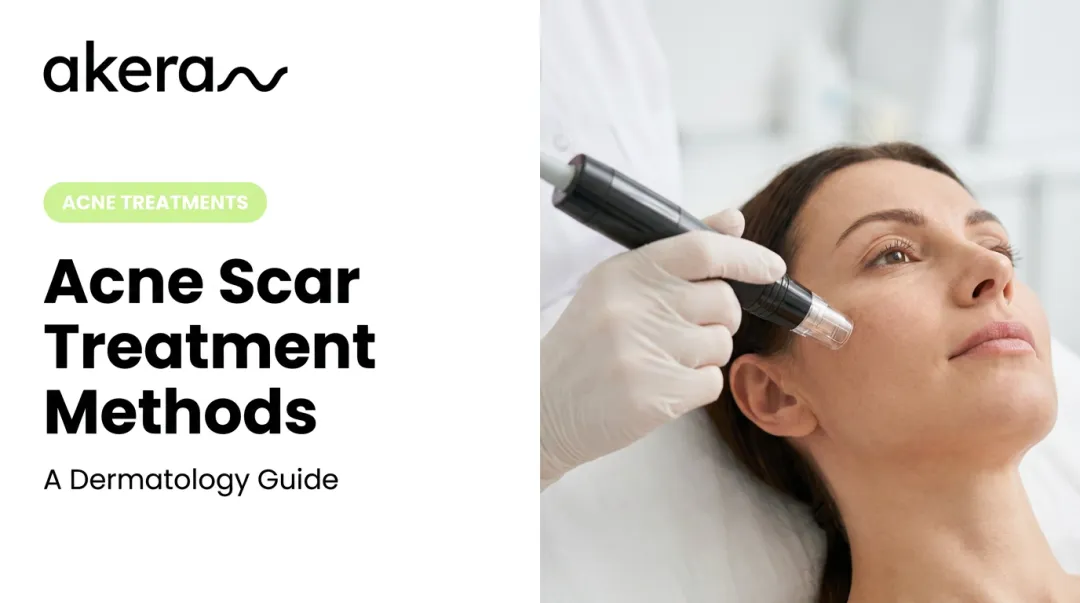
Standard microneedling creates controlled micro-injuries in the dermis to trigger collagen and elastin production — directly addressing the elasticity loss that makes pores appear larger. RF microneedling takes this further by delivering radiofrequency energy deeper into the dermis, producing stronger skin tightening and structural remodelling than needling alone.
A 2024 retrospective study of 22 patients found that fractional microneedling radiofrequency reduced photographic pore scores from 3.55 to 2.59 after three sessions.
Akera Health's Morpheus8 Pro combines precision microneedling with radiofrequency to address pore concerns at a structural level. Patient Kritika Sharma noted "a visible reduction in fine lines and enlarged pores" following her sessions, with skin that looked "tighter, brighter, and more rejuvenated." Post-treatment redness and swelling typically resolve within 48 hours.
This treatment is particularly suited for patients who:
- Haven't seen results from surface-level treatments
- Have concurrent skin laxity, acne scarring, or fine lines
- Want deeper structural remodelling in fewer sessions

Laser Treatments
Laser resurfacing stimulates collagen remodelling and tightens pore appearance by resurfacing the outer skin layer. The choice of modality is critical for Indian skin tones.
| Laser Type | Evidence | Key Consideration |
|---|---|---|
| Fractional CO2 (ablative) | Greater pore improvement in split-face trial vs. Nd:YAG | Higher PIH risk for Fitzpatrick IV–VI |
| Non-ablative fractional (1565-nm) | Improved enlarged pores; milder reactions | More modest effect; safer reaction profile |
| Long-pulsed 1064-nm Nd:YAG | Milder treatment reactions | Less pore-improvement vs. fractional CO2 |
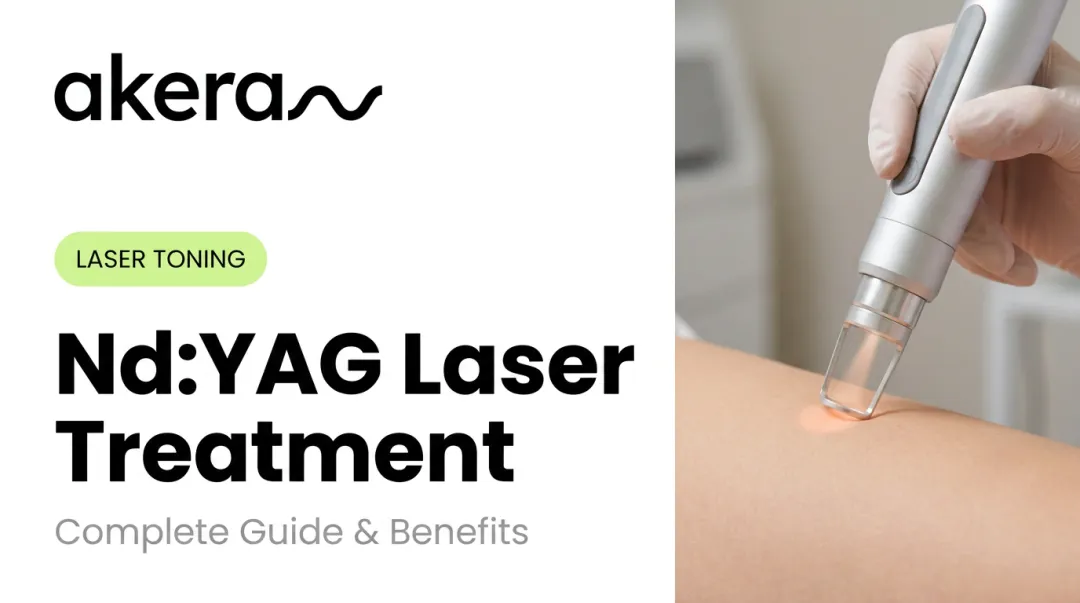
Akera Health's Laser Toning service uses the TriBeam Q-switched Nd:YAG laser, which penetrates the dermis to stimulate collagen production and works safely across all skin types, with customised protocols for diverse skin tones. Sessions start from ₹5,500.
When to Consider Clinical Treatment
Clinical treatment is worth discussing with a dermatologist when:
- At-home routines show no visible improvement after 8–12 weeks
- Pores are accompanied by persistent acne, scarring, or skin laxity
- Surface-level exfoliation has reached its limits
At Akera Health, all clinical treatments are dermatologist-supervised, with treatment plans customised based on skin type, root cause, and individual skin history — not a one-size-fits-all protocol.
Common Mistakes That Make Pores Look Worse
The right treatments only work if you're not undermining them with everyday habits. These are the most common mistakes that make pores look larger than they are:
- Over-exfoliating or using harsh scrubs — Aggressive physical exfoliation disrupts the skin barrier and triggers inflammation. Twice-weekly gentle exfoliation is enough for most skin types — overdoing it backfires
- Comedogenic makeup — Oil-based or pore-clogging foundations settle into and expand pores. Look for "non-comedogenic" and "oil-free" on product labels before purchasing
- Squeezing or picking at pores — Manual extraction causes micro-trauma, introduces bacteria, and can permanently damage pore walls. Targeted BHA treatments or professional extraction by a trained clinician are far less damaging
- Skipping moisturiser on oily skin — Stripping moisture signals the skin to overproduce sebum to compensate. A lightweight, non-comedogenic moisturiser actually keeps sebum production — and pore visibility — in check

Frequently Asked Questions
What is a pore?
Pores are tiny openings in the skin connected to oil glands and hair follicles. They allow sebum and sweat to reach the skin's surface — a necessary function for skin health. They are not flaws that can be eliminated.
What causes pores to look enlarged?
All skin has pores. Enlarged appearance is caused by excess sebum stretching the pore walls, collagen and elasticity loss from ageing or UV damage, clogging from dead skin or makeup, and genetic predisposition. Each of these factors can be addressed with the right treatments.
What do healthy pores look like?
Healthy pores are very small, barely visible openings distributed evenly across the face. They tend to be more noticeable on the nose and cheeks even in healthy skin — this is normal, not a sign of a problem.
Can large facial pores be permanently closed?
No. Pore size is largely genetic and cannot be permanently eliminated, as confirmed by Cleveland Clinic. With consistent skincare and clinical treatments, however, their appearance can be reduced and maintained long-term.
Which ingredients work best for minimising large pores?
Retinol, niacinamide, and salicylic acid are the most evidence-backed options, each targeting a different cause: retinol boosts cell turnover and collagen, niacinamide reduces sebum output, and salicylic acid unclogs pores from within.
When should I see a dermatologist for large pores?
Consult a dermatologist when at-home routines show no improvement after 8–12 weeks, when pores are accompanied by persistent acne or scarring, or when you want a targeted, personalised treatment plan. You can book a consultation with Akera Health's certified dermatologists at akerahealth.com/pages/contact.