Introduction
You've tried the serums, the sheet masks, the expensive moisturisers — and your skin still looks dull, uneven, or perpetually tired. Sound familiar? That gap between what you're doing and the luminous, almost translucent skin you see celebrated in K-beauty content is exactly what the glass skin facial is designed to close.
The "glass skin" ideal describes skin so hydrated and clear it reflects light evenly — and it's moved well beyond social media aesthetics. It's now a skin health goal pursued in dermatology clinics across India, including right here in Bengaluru, where pollution, UV exposure, and humidity create a specific set of challenges for skin.
This guide covers what a glass skin facial actually involves at a professional clinic — not what filters show you — the science behind each step, who benefits most, and how to maintain results between sessions. If you're dealing with pigmentation, dehydration, or uneven texture, you'll find specific, actionable answers here.
Key Takeaways
- A glass skin facial is a multi-step clinical treatment targeting deep hydration, texture, and luminosity — distinct from a standard surface-level facial
- It differs from a standard salon facial in technique, active ingredients, and the skin layers it addresses
- One session produces visible results; a series of 3–4 sessions builds sustained improvement in tone and texture
- Skin type determines the protocol — a dermatologist consultation ensures the approach is right for you
What Is a Glass Skin Facial?
The Concept Behind the Glow
"Glass skin" entered global beauty vocabulary around 2017 when K-beauty coverage began describing the Korean skincare ideal: skin so clear, smooth, and hydrated that it appears almost translucent. As Allure reported, K-beauty authority Alicia Yoon defines it as crystal-clear, luminous, and poreless-looking — the emphasis being on appearance, not the physical elimination of pores.
This matters. Glass skin isn't a filter or a makeup technique — it's a skin health outcome achieved through consistent, layered care: deep hydration, a repaired moisture barrier, and even skin tone built over time.
The Korean skincare philosophy behind it prioritises nourishment and long-term skin health over quick surface fixes, which is precisely why professional treatments designed around this goal go deeper than a basic facial.
What the Facial Actually Does
A glass skin facial is a multi-step professional treatment designed to accelerate this outcome — achieving in a clinic setting what months of at-home layering might only partially accomplish. Unlike a standard brightening or hydrating facial, which works on the outermost skin layer, it targets multiple levels simultaneously:
- Exfoliates dead cells that block ingredient absorption
- Infuses actives at concentrations higher than topical products typically deliver
- Reinforces the moisture barrier for sustained hydration
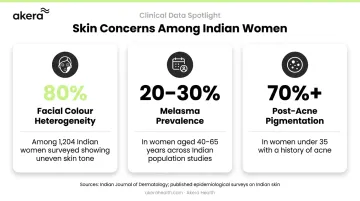
For Indian skin specifically, the relevance is significant. Research on skin hyperpigmentation in Indian women found facial colour heterogeneity in over 80% of 1,204 women studied across four cities, with melasma in 20–30% of women aged 40–65, and post-acne pigmentation in over 70% of Indians under 35 with a history of acne. A treatment that addresses hydration, texture, and uneven tone simultaneously is particularly well-matched to these concerns.
One important clarification: glass skin does not mean perfect, pore-free skin. It means genuinely healthy, well-hydrated, evenly toned skin with a natural inner glow. Setting that expectation correctly is part of what separates a good dermatology clinic from a trend-chasing one.
What Happens During a Professional Glass Skin Facial?
A session typically spans 60–90 minutes and follows a structured sequence. In a dermatologist-supervised setting like Akera Health in Bengaluru, the protocol is assessed and customised before the session begins — your skin type, concerns, sensitivity level, and pigmentation history all inform which steps and which actives are used.
Step 1: Deep Cleansing and Gentle Exfoliation
The facial opens with a thorough cleanse — removing makeup, sunscreen, sebum, and the layer of environmental pollutants that accumulates daily. This is followed by gentle exfoliation using enzymatic agents (such as papain or bromelain) or mild chemical exfoliants like AHAs or PHAs.
AHAs work by reducing the cohesion between surface skin cells, encouraging dead skin shedding (desquamation), and revealing fresher skin beneath. PHAs offer a gentler alternative — their larger molecular structure means less penetration depth and less risk of irritation, which is particularly relevant for darker skin types where inflammation can trigger post-inflammatory hyperpigmentation (PIH). Without this surface reset, even high-quality actives applied next sit on dead skin rather than reaching where they can work.
Step 2: Extraction and Pore Decongestion
Clogged pores contribute to uneven texture, enlarged-looking pores, and dull skin. This step addresses congestion through precise manual extractions or vacuum suction — performed with sterilised tools in a controlled clinical environment.
The difference between professional and DIY extraction is significant. Improper technique or unsterilised tools can cause micro-tears, infection, or — particularly in darker skin tones — lasting PIH. Clinical extractions minimise these risks.
Step 3: Active Ingredient Infusion
This is the core of the glass skin facial. High-concentration actives are delivered into the skin, often through advanced delivery methods that enhance penetration beyond what passive topical application achieves:
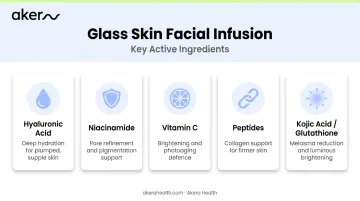
- Hyaluronic acid — hydration and moisture retention; molecular weight affects depth of penetration, with lower-weight HA reaching deeper layers
- Niacinamide — evidence supports improvement in sebum regulation, visual pore appearance, and pigmentation with consistent use
- Vitamin C — a 2023 systematic review confirms topical vitamin C can improve uneven pigmentation and photoaging, though formulation stability matters
- Peptides — support collagen production and skin structure
- Kojic acid or glutathione — used for brightening, particularly for melasma and sun-induced pigmentation
In clinical settings, actives like these are often delivered via iontophoresis — a low electrical current that drives charged molecules deeper into skin than passive application alone can achieve.
Step 4: Hydrating Mask and Barrier Support
After active infusion, a professional-grade hydration mask is applied. This step seals in the actives, calms any mild reactivity from exfoliation or infusion, and reinforces the moisture barrier. It's also what produces the immediate dewy, plumped appearance clients notice walking out of the clinic.
Step 5: SPF and Aftercare Guidance
The session closes with a gentle moisturiser and broad-spectrum SPF (for daytime appointments). The treating dermatologist then walks you through a home-care routine — typically covering actives to use, ingredients to avoid for 48 hours, and when to schedule the next session.
Key Benefits of a Glass Skin Facial
Immediate Luminosity That Builds Over Time
Results are visible after the first session — skin looks brighter, more hydrated, and noticeably smoother. The deeper benefits build progressively across multiple sessions: improved texture, reduced pigmentation, and a strengthened moisture barrier as cellular renewal is supported and collagen production is gradually stimulated.
Hydration That Goes Beyond Surface Moisturisers
Most creams and serums engage primarily with the outermost skin layers. Professional active infusion — particularly with hyaluronic acid — works differently. The skin's ability to retain moisture improves over time, not just temporarily after application.
Transepidermal water loss (TEWL) is a key marker of barrier function; treatments that address it create more durable hydration than topical products alone.
That said, home moisturisers aren't ineffective — a glycerin-based moisturiser can noticeably improve hydration for up to 24 hours. The professional advantage lies in concentration, delivery method, and the multi-layer approach.
Refined Texture and Minimised Pores
The combination of exfoliation, extraction, and active infusion works together to:
- Smooth rough or uneven skin surface
- Reduce the appearance of enlarged pores
- Even out skin tone disrupted by sun damage or sebum congestion
This is particularly relevant for oily and combination skin types, common in India's climate, where congestion and enlarged-looking pores are frequent complaints.
Addresses Pigmentation and Uneven Tone
Brightening actives in the infusion step — niacinamide, vitamin C, and kojic acid — can visibly reduce dark spots, post-acne marks, and sun-induced pigmentation over a series of sessions.
This is where the glass skin facial has particular relevance for Indian skin: melasma, post-inflammatory hyperpigmentation (PIH), and UV-induced dullness all respond to these ingredients when applied consistently at clinical concentrations.
Minimal Downtime
Unlike laser treatments or medium-depth chemical peels that require meaningful recovery time, a glass skin facial is designed to be non-invasive. Mild redness may appear for a few hours post-treatment but resolves quickly — most clients return to normal activities the same day.
Who Is a Glass Skin Facial Best For?
Ideal Candidates
The treatment is well-suited to a wide range of individuals:
- Dull, tired-looking, or dehydrated skin
- Mild pigmentation, uneven tone, or sun damage
- Compromised moisture barrier (skin that feels tight, rough, or reactive)
- Pre-event skin refresh (wedding, function, travel)
- Anyone seeking a non-invasive skin quality improvement
The protocol is adaptable across oily, dry, combination, and sensitive skin types — the choice of exfoliant strength, infusion actives, and mask formulation changes based on individual assessment.

Who Should Approach with Caution
Some situations require a modified protocol or addressing a primary concern first:
- Active breakouts or inflamed acne — barrier dysfunction is common here; abrasive or high-concentration exfoliants need to be adjusted or skipped entirely
- Open wounds or sunburned skin — exfoliation should be deferred until the skin has fully healed
- Reactive or rosacea-prone skin — the AAD recommends avoiding exfoliation and friction for rosacea; the protocol requires careful modification before proceeding
At Akera Health in Bengaluru, a pre-treatment consultation with a qualified dermatologist — someone like Dr. Lavina Mittal, Medical Director with an MBBS and MD — is the starting point. The skin assessment identifies the right protocol for each person's skin type, genetics, and lifestyle before any treatment begins.
Age and Skin Type Considerations
The treatment spans age groups effectively, with benefits that shift depending on where your skin is in its journey:
- Younger clients gain from preventive hydration, glow, and early pigmentation management
- Older clients see improvements in moisture retention, fine lines, and elasticity
- Those dealing with pigmentation and pollution-related dullness — common concerns in Indian climates — respond especially well to the brightening and barrier-repair steps
Glass Skin Facial vs. Regular Salon Facials
| Factor | Glass Skin Facial (Clinical) | Basic Salon Facial | HydraFacial |
|---|---|---|---|
| Skin penetration | Multi-layer; active infusion below surface | Primarily surface | Surface + assisted serum delivery |
| Ingredients | Clinical-grade actives, customised | Generalised retail products | Device-specific serums |
| Customisation | Individual skin assessment before treatment | Skin type-based, general | Protocol is device-defined |
| Pigmentation | Targeted brightening actives | Limited | Limited |
| Result duration | Progressive across sessions | Days to 1 week | Varies |
| Supervision | Dermatologist-led | Aesthetician-led | Varies by clinic |
The core distinction is in the depth of approach. A salon facial cleans and refreshes the surface — useful, but limited. A clinical glass skin facial uses a structured, assessment-led protocol with active ingredients chosen based on your specific concerns, delivered through techniques that improve absorption.
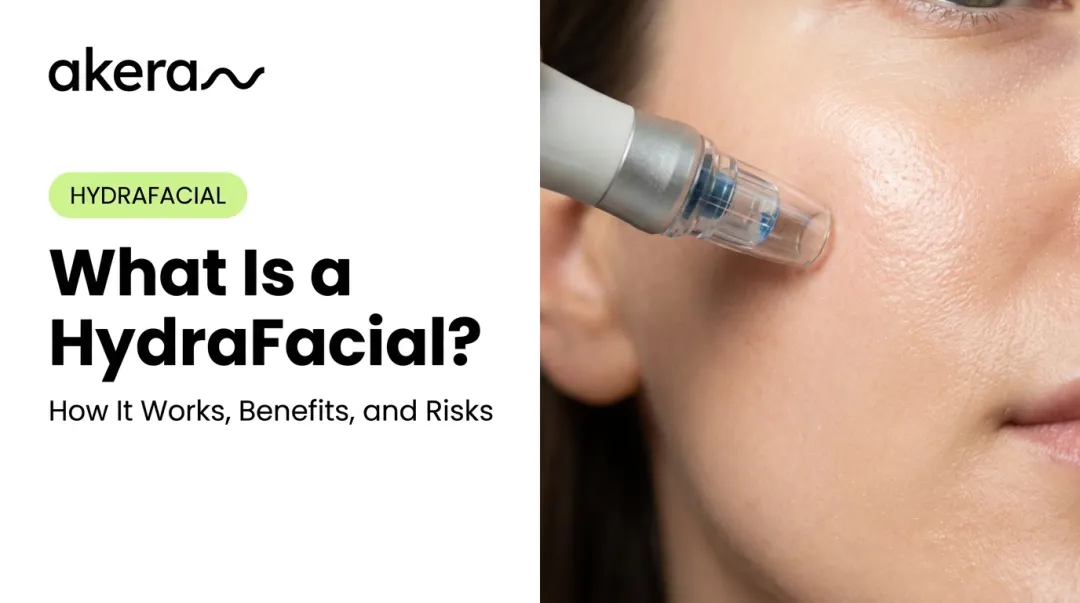
A HydraFacial is a device-specific treatment using vortex technology for cleansing and serum infusion. A glass skin facial is a broader, outcome-oriented protocol that can incorporate multiple techniques — including HydraFacial as one component. The two serve overlapping goals but aren't interchangeable. At Akera Health, the HydraFacial runs as a distinct three-step protocol covering deep cleansing, exfoliation, extraction, and hydration infusion.
If your primary concern is congestion and surface hydration, a HydraFacial may be sufficient. If you're targeting pigmentation, uneven texture, or dullness across multiple layers, a full glass skin protocol offers more targeted flexibility.
A quick note on terminology: "clinical grade" has no standardised regulatory definition in cosmeceuticals. The meaningful distinctions are disclosed formulations, active concentrations, clinical assessment, and qualified supervision — not simply where a product is sold or how it's marketed.
How to Maintain Your Glass Skin Glow at Home
The Essential Post-Facial Routine
The skin is most receptive to topical products in the days following a professional treatment. Build your routine around these pillars:
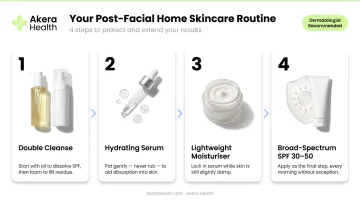
- Double cleanse (morning and evening) — particularly important if you wear sunscreen or makeup; an oil-based first cleanse effectively removes water-resistant SPF
- Hydrating serum — hyaluronic acid or niacinamide-based essence applied to damp skin
- Lightweight moisturiser suited to your skin type
- Broad-spectrum SPF 30–50 every morning — UV exposure happens indoors too, through windows, so skipping it on stay-home days still carries risk
Dermatologists broadly recommend broad-spectrum, water-resistant SPF 30 or higher — and for deeper skin tones prone to dark spots, tinted sunscreen containing iron oxide adds visible-light protection that standard SPF alone doesn't cover. Akera Health's SPF 50+ sunscreen range offers formulations for oily/combination, normal, and dry/sensitive skin — a practical option for maintaining results between sessions.
Treatment Frequency
Your post-treatment routine sets the foundation — how often you return for professional sessions builds on it. One session produces a visible immediate glow. For meaningful improvement in texture, hydration depth, and pigmentation, a series of 3–4 sessions spaced roughly 3–4 weeks apart is the general recommendation, though the right schedule depends on your skin's response and baseline condition. A dermatologist will personalise this.
Maintenance sessions every 4–6 weeks or seasonally help sustain and build on cumulative results.
What to Avoid Post-Treatment
Give your skin 24–48 hours to settle after the facial. During that window, avoid:
- Active exfoliants (AHAs, BHAs, PHAs)
- Retinoids
- Heavy or occlusive makeup
- Prolonged sun exposure without SPF
Beyond products, daily habits shape your results over time. These lifestyle factors directly affect the skin's ability to retain moisture and maintain an even tone:
- Adequate water intake and consistent sleep
- Dietary antioxidants — vitamin C-rich foods, omega-3 fatty acids
- Limiting smoking and excessive alcohol
Frequently Asked Questions
Which facial is best for glass skin?
The best option combines deep hydration, gentle exfoliation, and active ingredient infusion — typically a professional glass skin facial or hydra-glow facial performed at a dermatology clinic. The most suitable type depends on your specific skin concerns, which is why a dermatologist consultation is the right starting point — not a one-size-fits-all pick.
Is a glass skin facial worth it?
For most people dealing with dull, dehydrated, or uneven skin, a professional glass skin facial delivers results that go beyond what home routines achieve alone. A single session gives visible glow; sustained improvement comes from a series paired with consistent home-care maintenance.
How long does Korean glass skin last?
A single session's glow and plumpness typically lasts 1–3 weeks. Cumulative improvements in texture, pigmentation, and hydration from a treatment series last much longer — particularly when you maintain a consistent home-care routine between clinic visits.
Is a glass skin facial safe for sensitive or acne-prone skin?
When performed by a trained professional, yes. The protocol can be adapted for sensitive or acne-prone skin by reducing exfoliation intensity and selecting non-comedogenic, calming actives. A pre-treatment consultation is essential — don't skip it if your skin is reactive or currently breaking out.
How many sessions do I need to see results?
One session produces a visible glow; significant improvement in texture, hydration, and tone typically requires 3–4 sessions. Periodic maintenance sessions sustain and build on those results — your dermatologist will advise a schedule based on your skin's progress.
What is the difference between a glass skin facial and a HydraFacial?
A HydraFacial is a specific device-based treatment using vortex technology for cleansing, extraction, and serum infusion. A glass skin facial is a broader outcome-oriented protocol that can incorporate various techniques and ingredient combinations. Both target hydration and radiance — the right choice depends on your skin concerns and what your dermatologist recommends.