
Both Russian and normal lip fillers use hyaluronic acid (HA). What separates them is where and how the filler is placed — and choosing a technique that doesn't match your anatomy can leave you with results that feel "off" even when technically well-executed.
This guide breaks down exactly how each technique works, what results to expect, and how to choose what's right for your face — not just what's trending.
Key Takeaways
- Both techniques use hyaluronic acid; injection direction and placement depth determine the final shape
- Russian filler prioritises vertical lift and Cupid's bow definition; normal filler adds rounded fullness and projection
- The right technique depends on your anatomy and what you want to achieve — there is no single best option
- Longevity depends on the HA product used, not the technique label
- Always consult a qualified dermatologist before either procedure to confirm what suits your lip anatomy
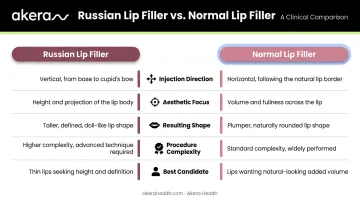
Russian Lip Filler vs Normal Lip Filler: Quick Comparison
| Feature | Russian Lip Filler | Normal Lip Filler |
|---|---|---|
| Injection Direction | Vertical struts from base upward | Linear threading, serial puncture, or bolus along border and body |
| Aesthetic Focus | Cupid's bow definition, vertical height, central lift | Overall fullness, symmetry, soft rounded pout |
| Resulting Shape | Taller vermilion, structured, flatter side profile | Rounded, projected, naturally fuller look |
| Procedure Complexity | More injection points, higher skill requirement | Fewer entry points, more widely practised |
| Best Candidate | Thin lips wanting height and definition | First-time patients, those wanting volume or projection |
Note on longevity: Both techniques use hyaluronic acid filler, so how long results last depends on the specific product used and your individual metabolism — not the injection method itself.
What Is Normal Lip Filler?
Classic lip filler — the technique that has been practised for decades and remains the most common approach — involves injecting hyaluronic acid along the vermilion border, the Cupid's bow, and into the body of the lip itself. Injectors use techniques like linear threading, serial puncture, and fanning to distribute product across the lip structure.
What the Results Look Like
The outcome is lips that look fuller, rounder, and more projected when viewed from the side. The enhancement works with your existing lip shape rather than restructuring it — the result is your natural lips, with added hydration, definition, and volume.
Classic filler is flexible. Depending on where product is placed, a practitioner can:
- Emphasise the vermilion border for sharper definition
- Build body volume for a plumper appearance
- Add subtle Cupid's bow enhancement without dramatic reshaping
- Correct mild asymmetry by adjusting product distribution
Who It Suits Best
Classic filler works well for a wide range of patients, including:
- First-time filler patients who want a predictable, natural result
- People with mild lip asymmetry seeking balance
- Those who want more volume without changing their overall lip shape
- Anyone who prefers a pillow-soft pout with forward projection
What Is Russian Lip Filler?
Russian lip filler (described in a 2024 Journal of Cosmetic Dermatology recommendation as a "tenting" or "fencing" variant) involves placing hyaluronic acid as vertical struts along the lip, injecting upward from the base toward the vermilion border. The goal is vertical height and structured lift, not additional forward volume.
What the Results Look Like
From the front, the lips appear taller, more sculpted, and defined — often called a "doll-like" look. From the side, there is noticeably less projection compared to classic filler. The technique prioritises shape and lift over sheer fullness.
A 2021 peer-reviewed study described the original Russian method as creating vertical struts intended to increase vermilion height while maintaining a relatively flat profile.
The technique requires precise anatomical placement. It crosses the vermilion line and wet-dry border, which demands a higher level of injector skill and careful execution.
Who It Suits Best
- Individuals with naturally thin lips who want visible height rather than projection
- Those wanting a clearly defined, sharper Cupid's bow
- People comfortable with a structured, elevated aesthetic
- Patients with prior filler experience who want a more tailored outcome
Key Differences Between Russian and Normal Lip Fillers
Injection Technique
Normal filler uses fewer entry points distributed along the border and lip body. Russian placement involves multiple precise vertical injections at specific anatomical points — making it technically more demanding.
This matters for two reasons. First, the skill threshold is genuinely higher for Russian technique; poor execution carries documented risks including filler spread into the cutaneous lip and vascular occlusion. Second, because more injection points are involved, the procedure is more involved overall.
Both techniques require topical numbing cream applied beforehand. At Akera Health in Bengaluru, a numbing protocol is part of the standard pre-injection preparation for all filler procedures.
Shape and Aesthetic Result
The aesthetic difference is clear and meaningful:
- Normal filler creates soft, rounded fullness across the entire lip — the result looks balanced from all angles and integrates naturally
- Russian filler produces a defined structure: sharper Cupid's bow peaks, elevated central vermilion, more angular silhouette when viewed straight-on
Neither is objectively better. One suits a patient wanting a natural enhancement; the other suits someone who wants visible structure and lift.
Side Profile and Projection
This is the most commonly misunderstood distinction. Normal lip filler pushes lips outward — more forward projection from the side. Russian filler creates upward, vertical lift with less outward projection, so the side profile remains relatively flat.
If you want a pronounced pout visible from the side: classic filler. If you want defined, sculpted lips that look elevated straight-on without protruding: Russian technique.

Discomfort and Downtime
Russian placement targets more injection points near sensitive anatomical structures — including the philtrum columns and vermilion peaks — so some patients report more discomfort than with classic filler. Swelling may also appear more pronounced immediately after.
Post-procedure care for both techniques includes:
- Avoiding strenuous exercise and excessive heat or sun exposure for the first 24 hours (per Restylane manufacturer guidance)
- Applying a cold compress to reduce bruising
- Expecting visible results immediately, with final results settling within two weeks as swelling resolves
Longevity
Many guides overstate the longevity difference between techniques. The claim that "Russian filler lasts 12 months, classic lasts 6–9 months" is not supported by clinical evidence. FDA data for Juvéderm Volbella XC shows 61.8% of subjects remained lip-fullness responders at 12 months — but that's product-specific data, not technique-specific.
Longevity depends on the HA product used, the dose, your metabolism, and lifestyle factors. Dermal fillers generally last between 6 to 18 months depending on the treatment area. When comparing options, ask your practitioner about the specific product being used — that will tell you far more about expected duration than the technique label alone.
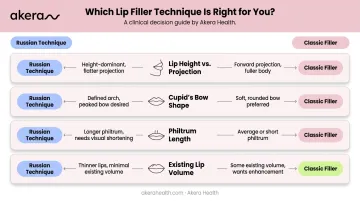
Which Technique Is Right for You?
The right technique is the one that works with your anatomy — not the one that's popular on social media.
Anatomy-Led Decision Making
Consider these factors:
- Lip height vs. projection: Want more height and definition? Russian. Want fuller, more projected lips? Classic.
- Cupid's bow: Want sharper, more defined peaks? Russian technique excels here. Happy with your existing shape but want more volume? Classic works better.
- Philtrum length: A longer philtrum with a thin upper lip often benefits from the vertical lift Russian technique provides.
- Existing lip volume: If you already have adequate lip volume and just want shape refinement, Russian may be appropriate. If volume is the primary concern, classic filler addresses that more directly.
A Note on South Asian Facial Anatomy
A 2025 Indian expert paper on hyaluronic acid fillers for Indian facial features reports that Indian patients tend to have thinner upper vermilion and shorter upper-lip length compared to Caucasian reference populations — and recommends anatomy-led technique selection rather than applying Western or East Asian aesthetic standards.
This matters because lip anatomy varies significantly even within South Asian populations. Applying generalised assumptions about lip fullness or Cupid's bow shape can produce disproportionate results. Any consultation at a Bengaluru clinic should account for your individual measurements, not population-level generalisations.
When Dissolving Existing Filler Makes Sense
If you have existing classic filler and want to switch to Russian technique, your dermatologist may recommend dissolving it first. Hyaluronidase removes HA filler, and dissolution is indicated when excess or misplaced product would interfere with the structural placement Russian technique requires.
This step isn't always mandatory. But skipping it when filler is already present risks an uneven, overfilled result from layering two different placement methods.
Hybrid Approaches
For patients whose anatomy sits between these two profiles, a hybrid approach can work well: Russian-style vertical placement at the Cupid's bow for definition, combined with classic volume through the body of the lip for softness. This requires a practitioner skilled in both methods and a clear read of what the patient's anatomy can actually support.
At Akera Health in Bengaluru, dermatologist-supervised consultations assess lip anatomy, facial proportions, and aesthetic goals before any technique is recommended. If a particular approach won't suit your anatomy, that conversation happens before treatment — not after.
Conclusion
Neither Russian nor normal lip filler is universally superior. Russian technique suits a sculpted Cupid's bow with vertical lift; classic filler suits natural-looking fullness and projection; and many patients get their best results from a blended approach that borrows from both.
What matters most is having a qualified dermatologist assess your baseline anatomy and your goals before any product is injected.
If you're considering lip filler in Bengaluru and want honest, anatomy-led guidance on which technique suits your face, book a consultation with Akera Health's dermatology team. The aim is a result that looks natural to your face — whether that means more definition, lift, or volume.
Frequently Asked Questions
Are Russian lip fillers better than regular lip fillers?
There's no single winner here. Russian fillers suit those wanting vertical lift and Cupid's bow definition; regular fillers work better for volume, projection, and natural fullness. The right choice depends on your lip anatomy and the aesthetic outcome you're after.
Can Russian lip fillers look natural?
When performed conservatively and proportioned to the patient's facial features, Russian filler can look entirely natural. Overdone results typically come from using too much product or choosing a technique that doesn't suit the individual's baseline lip shape.
Are Russian lip fillers more painful than regular fillers?
Russian technique involves more injection points near sensitive areas, so some additional discomfort is possible. That said, topical numbing cream is applied before both procedures, and most patients describe both techniques as manageable.
How long do Russian lip fillers last compared to normal lip fillers?
Longevity depends on the specific HA product used, individual metabolism, and lifestyle — not the technique itself. Most HA fillers show measurable results at around 12 months, but this reflects the product choice, not which injection method was used.
Can I switch from normal lip fillers to Russian lip fillers?
It's possible, but a dermatologist may recommend dissolving existing filler first. Residual classic filler can interfere with the precise structural placement Russian technique requires, leading to an uneven outcome.
What happens if Russian lip fillers are not done correctly?
Poor technique can cause filler to spread into the cutaneous lip, creating a plateau or ledge appearance, migration, visible unevenness, or an unnatural "duck lip" effect. This is why practitioner experience and anatomical knowledge are especially critical for Russian placement.