The good news: understanding what's driving the growth helps you choose the right removal approach — and recognise the rare cases that need medical attention. For women with Indian skin tones, method selection matters even more, since some techniques carry higher risks of post-inflammatory darkening on deeper skin.
This guide covers the hormonal causes behind menopausal facial hair, the areas most commonly affected, removal options from temporary to permanent, and practical lifestyle strategies to slow new growth over time.
Key Takeaways
- Facial hair growth during menopause is driven by declining oestrogen and relative androgen dominance — a normal hormonal shift, not a disorder
- The upper lip and chin are most commonly affected; sudden, rapid, or widespread growth warrants medical evaluation
- Temporary methods like threading and depilatory creams manage existing hair; laser hair reduction offers long-term results
- Diet, stress management, and healthy weight all help modulate androgen levels and slow new growth
- Coarse terminal hair responds best to professional removal — home methods offer limited results
Why Does Facial Hair Grow During Menopause?
Menopausal facial hair has a clear hormonal explanation — and understanding it helps you choose the right response.
Declining Oestrogen Levels
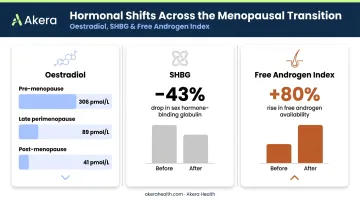
Oestrogen acts as a natural counterbalance to androgens like testosterone throughout a woman's reproductive years. As menopause approaches, that counterbalance disappears. Research tracking women across the menopausal transition recorded mean oestradiol concentrations of 306 pmol/L before menopause, 89 pmol/L in late perimenopause, and 41 pmol/L after menopause — a steep, measurable decline that leaves androgen activity far less opposed than before.
Relative Androgen Dominance
Testosterone levels don't necessarily spike during menopause. Instead, oestrogen falls much faster than ovarian androgen production declines — so the androgen-to-oestrogen ratio tips in favour of androgens. This state of relative androgen dominance is enough to activate androgen-sensitive follicles on the face, converting fine, lightly pigmented vellus hairs (the peach fuzz you may never have noticed) into coarser, darker terminal hairs.
This same hormonal imbalance simultaneously drives scalp hair thinning, which is why many women notice more facial hair and less scalp coverage at the same time.
Changes in Sex Hormone-Binding Globulin (SHBG)
SHBG is a protein that binds to testosterone and keeps it inactive. Lower SHBG means more free testosterone circulating and reaching facial hair follicles. A prospective study of 172 women found that mean SHBG fell 43% from four years before to two years after the final menstrual period, while the free androgen index rose 80% over the same period.
Two factors further suppress SHBG and compound this effect:
- Excess body fat — each additional kg/m² of BMI was associated with 4% lower SHBG in the same study
- High insulin levels from diets rich in refined carbohydrates and simple sugars
Lifestyle choices — diet, weight management, blood sugar control — directly affect how quickly facial hair progresses, not just how it's treated.
Common Areas Affected and When to Be Concerned
The upper lip and chin bear the brunt of menopausal facial hair — these sites score highest on the modified Ferriman-Gallwey scale, the clinical tool used to assess androgen-sensitive hair growth. Some women also notice increased fine hair along the jawline, cheeks, and sideburns.
This gradual, mild increase is a normal part of the menopausal transition. Hirsutism (excessive, male-pattern hair growth) is a different matter — and knowing the difference matters for how you respond.
Warning Signs That Warrant a Doctor's Visit
Seek medical evaluation if you notice any of the following alongside facial hair growth:
- Rapid onset — coarse hair appearing suddenly rather than gradually over months
- Chest or abdominal hair — new terminal hair extending well beyond the face
- Voice deepening or increased muscularity — signs of significant androgen excess
- Severe acne appearing alongside hair changes
- Scalp hair loss that is sudden or patchy rather than gradual diffuse thinning
- Unexplained central weight gain with easy bruising, purple stretch marks, or facial rounding (which may suggest cortisol excess rather than androgen dominance)
These signs, particularly in combination, can indicate elevated androgens from conditions such as PCOS, thyroid dysfunction, or (rarely) an androgen-secreting tumor. All of these require proper investigation, not cosmetic management alone.
Hair Removal Solutions: From Temporary to Permanent
Choosing the right method comes down to four practical questions: Is the hair fine or coarse? How large is the affected area? How sensitive is your skin? Are you looking for short-term maintenance or long-term reduction?
Temporary Hair Removal Methods
These options remove existing hair quickly but require ongoing maintenance:
- Tweezing — Best for isolated stray hairs on the chin; removes from the root for results lasting a few weeks. Practical for small numbers of hairs, not for larger areas
- Threading — Suited for the upper lip, jawline, and cheeks; works on all skin tones with minimal irritation when done professionally. The AAD notes results typically last around 4–5 weeks
- Waxing — Removes from the root with results lasting 3–6 weeks. Use cautiously on menopausal skin; the AAD advises stopping facial retinoids 2–5 days before waxing, as thinner menopausal skin is more susceptible to tearing and irritation
- Depilatory creams — Dissolve hair at the skin surface quickly and painlessly. Always patch-test first; menopausal skin has a more compromised barrier and may react to the alkaline chemicals in these formulas
Professional and Long-Term Solutions
For coarse terminal hair on larger areas, temporary methods become impractical. Professional options deliver more lasting results:
Laser hair removal targets melanin in hair follicles with concentrated light energy, progressively reducing growth over multiple sessions. The AAD notes that treatment generally requires six or more sessions, typically spaced 4–6 weeks apart. Because hormonal stimulation can trigger new follicle activity, maintenance sessions are often needed on the face.
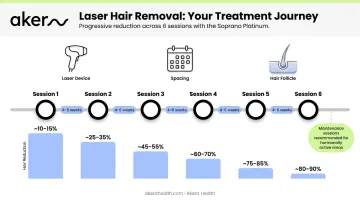
Traditional lasers perform best on dark hair against lighter skin. For women with Indian skin tones — Fitzpatrick types III–V — the risk of post-inflammatory hyperpigmentation is real with conventional systems. A 2024 Indian study of 73 women with Fitzpatrick III–V skin found mean chin hair count fell from 17.48 to 5.56 after six diode laser sessions, confirming both safety and efficacy in darker skin with the right technology.
At Akera Health in Bengaluru, laser hair removal is performed using the Soprano Platinum — a multi-wavelength diode laser system combining 755, 810, and 1064 nm wavelengths. It delivers energy via gradual heating with built-in contact cooling, specifically designed to protect darker skin from heat-related damage while still targeting follicles effectively.
All sessions are dermatologist-supervised, with settings customised per individual skin tone and hair type. Facial treatment areas include the upper lip, chin, and brows. Sessions start from ₹2,500; book a consultation at akerahealth.com/pages/contact.
Electrolysis destroys individual follicles using electrical current and is the only method the AAD describes as permanently removing hair of all colours and types — no maintenance required after successful treatment. It works regardless of hair colour, making it an option where laser is less effective (such as grey or white facial hair). The trade-off is time: each follicle must be treated individually, so larger areas require multiple extended sessions.
Choosing the Right Method Based on Hair Type
| Hair Type | Area | Recommended Approach |
|---|---|---|
| Fine peach fuzz | Cheeks, upper lip | Threading or dermaplaning |
| Isolated coarse hairs | Chin | Tweezing |
| Multiple coarse hairs | Upper lip, chin, jawline | Laser hair removal |
| White or grey coarse hairs | Any | Electrolysis |
| Reactive or very sensitive skin | Any | Avoid aggressive waxing; choose the gentlest effective method |
Lifestyle Changes That May Help Slow Facial Hair Growth
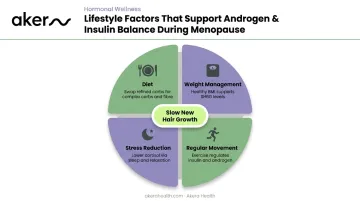
No lifestyle change will reverse existing terminal hair. But modifying certain habits can help lower the hormonal drivers of new growth, making your removal routine more manageable over time.
Diet and insulin management: High intake of refined carbohydrates and simple sugars raises insulin levels, which in turn suppresses SHBG and increases free androgen activity. An observational study in postmenopausal women found that diets with lower glycaemic load and more fibre were associated with higher circulating SHBG. Practical shifts that help:
- Replace white bread, rice, and sugary drinks with complex carbohydrates and quality proteins
- Prioritise colourful vegetables, legumes, and healthy fats
- Reduce ultra-processed snacks and refined sugar intake
Stress and body weight: Chronic stress raises cortisol, and excess body fat independently increases androgen production — both drive the hormonal conditions that accelerate unwanted hair growth. Practical steps that help:
- Move regularly to keep body fat within a healthy range
- Prioritise consistent sleep and relaxation to manage cortisol
- Treat stress management as part of your hair routine, not separate from it
Post-Removal Skin Care for Sensitive Menopausal Skin
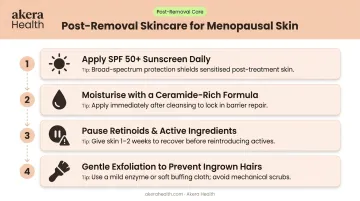
Menopausal skin is drier, thinner, and slower to recover than it once was. Post-removal care isn't optional — particularly for Indian skin tones, where inflammation more readily triggers lasting hyperpigmentation.
Key aftercare principles:
- Apply a broad-spectrum SPF 50+ sunscreen to treated areas every day without exception — visible-light-induced pigmentation is a real risk on Indian skin tones post-removal
- Moisturise immediately after removal with a fragrance-free, barrier-supportive moisturiser; look for ceramides or similar barrier-repair ingredients
- Pause active ingredients — hold retinoids before waxing as per AAD guidance, and follow your clinician's specific instructions before resuming acids or retinols after any professional treatment
- Prevent ingrown hairs with gentle exfoliation between sessions, but avoid aggressive scrubbing on recently treated skin
Research shows tinted sunscreen formulations containing iron oxides offer better protection against visible-light pigmentation than untinted mineral options alone. Akera Health's SPF 50+ sunscreen for dry/sensitive skin is formulated specifically for this skin type and works well on recently treated facial areas.
Frequently Asked Questions
How to get rid of facial hair during menopause?
Options range from quick temporary methods — threading, tweezing, and depilatory creams — to professional long-term treatments like laser hair removal and electrolysis. The right choice depends on whether the hair is fine or coarse, the size of the area, and your skin's sensitivity.
Does chin hair stop growing after menopause?
Not automatically. Oestrogen stays low post-menopause while testosterone remains relatively stable, so androgen dominance continues. Chin hair can persist and even gradually increase, which is why professional removal methods tend to be the most reliable long-term solution.
Is it normal to grow facial hair during menopause?
Yes — entirely. It affects roughly 39% of postmenopausal women and results from the natural hormonal shift that occurs at this stage. A few coarse hairs or visible peach fuzz is expected; only sudden, extensive, or rapidly spreading hair growth warrants medical evaluation.
What is the difference between hirsutism and normal menopausal facial hair?
Normal menopausal facial hair is limited to a few coarse hairs on the face, appearing gradually. Hirsutism involves heavy, male-pattern hair growth extending to the face, chest, or abdomen and is often linked to elevated androgens from conditions like PCOS or thyroid dysfunction.
Is laser hair removal safe for darker Indian skin tones?
Standard lasers can pose a discolouration risk on darker skin, but advanced multi-wavelength systems like the Soprano Platinum — used at Akera Health in Bengaluru — are designed for all skin tones. Settings are customised per individual assessment to ensure safe, effective treatment.
Can diet or lifestyle changes reduce facial hair growth during menopause?
Diet and lifestyle changes can slow new growth but won't reverse existing terminal hair. Reducing refined carbohydrates, maintaining a healthy weight, and managing stress all help lower insulin and androgen levels, reducing the hormonal stimulus that drives further follicle conversion.