Unlike trend-driven actives that come and go, HA is something your body already makes. The science behind it is straightforward, the benefits are well-documented, and it works across almost every skin type.
This guide covers what hyaluronic acid is, its proven benefits for skin and overall health, how to use it correctly, and what side effects to watch out for.
Key Takeaways
- HA is a molecule naturally produced by the body that holds moisture in the skin, joints, and eyes
- It comes in several forms — topical serums, oral supplements, eye drops, and injectable fillers — with each suited to a specific concern and depth of treatment
- Topical HA is safe for daily use and well-tolerated across most skin types, including sensitive and acne-prone
- For injectable HA fillers, results depend heavily on technique — always go to a licensed dermatologist for safe, natural-looking outcomes
What Is Hyaluronic Acid and How Does It Work?
Hyaluronic acid — also called hyaluronan or hyaluronate — is a naturally occurring glycosaminoglycan found throughout the body. It's most concentrated in the skin, joints, and eyes, where its primary job is keeping tissues hydrated and lubricated.
A 70 kg adult contains roughly 15 g of HA, with approximately half residing in the skin. About one-third of the body's HA turns over daily, which tells you how actively this molecule is being used and replenished.
How HA Retains Moisture
HA molecules work by attracting water and holding it within tissue — they're strongly hydrophilic, forming highly hydrated networks that keep skin plump and joints lubricated.
Molecular size matters here:
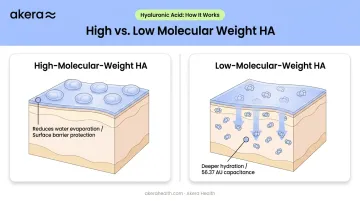
- High-molecular-weight HA forms a surface film on skin, reducing water evaporation and creating a protective barrier
- Low-molecular-weight HA penetrates deeper into the epidermis, supporting internal hydration and interacting with skin receptors
A 2024 randomised study confirmed this difference directly: after four weeks, low-MW HA produced significantly higher skin capacitance (56.37 AU) than high-MW HA (52.37 AU) in adults aged 60-80.
Why HA Declines With Age
As skin ages, HA levels in both the epidermis and dermis decrease. This decline contributes to dry skin, fine lines, reduced elasticity, and stiff joints.
Two factors drive this loss:
- Natural ageing: HA synthesis slows while breakdown continues, reducing overall tissue hydration
- UV exposure: Photoexposure shifts dermal HA toward lower molecular mass, accelerating the visible signs of aged skin
For anyone spending significant time outdoors in India, this makes replenishing HA particularly relevant.
Key Benefits of Hyaluronic Acid for Skin
Hydration and Moisture Retention
HA is a humectant — it draws water from the environment and locks it into skin tissue, delivering visibly plumper and smoother skin even in dry or polluted conditions.
This makes it especially useful for people in India dealing with dry or combination skin, seasonal weather shifts, or prolonged air-conditioning exposure.
Anti-Ageing and Wrinkle Reduction
A 2021 open-label study published in Dermatology and Therapy tracked 40 women using a topical HA serum over six weeks. Results showed:
- Skin hydration (corneometry) increased 134% immediately after application
- Investigator scores improved for smoothness (64%), plumping (60%), and fine lines (31%) at week six
While the study tested a multi-component serum and lacked a placebo arm, it provides real-world evidence for what topical HA-containing products can achieve with regular use.
Injectable HA — in the form of dermal fillers and skin boosters — goes further, restoring volume and reducing deeper wrinkles and folds.
Skin Plumping and Elasticity
HA supports the extracellular matrix structure of the skin, which is critical for maintaining firmness. Long-term use helps improve overall skin flexibility and reduces the slack appearance that typically comes with ageing. Skin boosters (injectable HA delivered in micro-droplets across the face) are particularly effective here, with results often visible within one week of treatment.

Wound Healing and Scar Recovery
HA plays a functional role in wound healing by creating a hydrated matrix that allows inflammatory cells and fibroblasts to migrate into damaged tissue. Different molecular weights serve different purposes:
- High-molecular-weight HA dampens excessive inflammation in the early stages
- Smaller HA fragments support later-stage healing — new blood vessel formation and fibroblast recruitment
Healthcare providers sometimes apply HA topically to support post-procedure recovery, minor burns, and surface-level scar fading.
Protection Against UV-Related Skin Damage
Beyond repair, HA also plays a protective role in skin structure. It is naturally present in the basal layer of the epidermis, and research published in Experimental Dermatology (2023) found that UV exposure disrupts HA metabolism — affecting the enzymes that synthesise and break it down. Chronic sun exposure shifts dermal HA toward lower molecular mass, weakening structural integrity over time.
For people with regular, high-intensity sun exposure — a reality for most living in India — topical HA replenishment is a practical way to support skin resilience alongside daily SPF use.
Other Uses of Hyaluronic Acid Beyond Skincare
Joint Health
Synovial fluid — which lubricates joints — naturally contains HA. As levels drop with age, joint pain and stiffness can result. The FDA has approved certain HA devices for intra-articular injection in knee osteoarthritis patients who haven't responded to conservative treatments.
That said, clinical evidence is mixed. A 2022 BMJ meta-analysis of 169 trials found the average pain reduction from HA injections was small — approximately 2 mm on a 100 mm scale — below what's considered clinically meaningful. The American Academy of Orthopaedic Surgeons does not recommend HA injections for routine knee OA management for this reason.
Eye Health
HA serves two distinct roles in eye care:
- Dry eye treatment: HA eye drops lubricate the eye surface. A 2021 meta-analysis of 19 studies (2,078 cases) found they improved tear production and symptom scores compared to saline, though results were not consistently superior to all other artificial tears.
- Surgical aid: HA is used as a viscoelastic agent in ophthalmic devices during procedures such as cataract surgery.
Emerging Applications
HA is being explored for respiratory conditions (as an adjunct in cystic fibrosis management) and for bladder pain syndrome via intravesical instillation. Both applications are in active clinical investigation, and neither is available as an over-the-counter or self-directed therapy.
How to Use Hyaluronic Acid
Topical Serums and Creams
Best practices for topical HA:
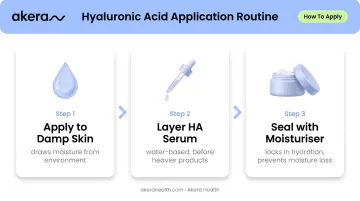
- Apply to damp skin — HA draws moisture from its environment; applying to damp skin gives it more to work with
- Follow with a moisturiser — sealing HA in with an occlusive or emollient prevents it from drawing moisture from deeper skin layers in dry air
- Use morning and/or evening — HA is gentle enough for twice-daily use across most skin types, including oily and sensitive skin
Oral Supplements
HA supplements are available in capsule and liquid form. A 2023 randomised, double-blind trial of 129 healthy women found that 100–200 mg/day of 300 kDa HA over 12 weeks improved skin hydration, skin tone, and epidermal thickness with no adverse events reported.
A 2021 trial with 40 participants similarly found that 120 mg/day of oral HA reduced wrinkle area and improved stratum-corneum moisture versus placebo over 12 weeks.
Consult a doctor before starting oral HA supplements, particularly if you're managing other health conditions or taking medication.
Injectable and Clinical-Grade Treatments
Injectable HA — delivered as dermal fillers or skin boosters — is the most potent form available. It's used to:
- Restore facial volume and lift
- Reduce deep wrinkles and nasolabial folds
- Improve overall skin hydration and texture through micro-injection techniques
- Address acne scarring and surface irregularities
Results typically last 6 to 18 months depending on the product and treatment area, with follow-up sessions recommended to maintain outcomes.
These treatments must only be administered by a trained and licensed medical professional. For anyone in Bengaluru considering HA-based injectable treatments, the team at Akera Health offers physician-supervised dermal filler and skin booster sessions, with personalised treatment plans developed by MD-qualified dermatologists across their HSR Layout and HRBR Layout clinics.
Combining HA With Other Skincare Ingredients
HA pairs well with most skincare actives:
- Vitamin C — apply vitamin C first, then layer HA on top for hydration
- Niacinamide — compatible and complementary; no known adverse interactions
- Retinol — HA helps offset the dryness and irritation retinol can cause, making it a useful pairing in anti-ageing routines
When layering multiple actives, apply HA after water-based serums and before heavier creams or oils — this keeps it effective regardless of what else is in your routine.
Side Effects and Safety Considerations
Topical Use
Topical HA is well-tolerated by most people. Adverse reactions are uncommon and typically mild : some individuals may notice slight redness or irritation with a new product, usually from other ingredients in the formulation rather than HA itself.
Recommendation: Do a patch test on the inner arm before applying a new HA product to your face, especially if you have sensitive or reactive skin.
Injectable HA
Common side effects following dermal filler or skin booster injections are mostly related to the injection process itself, not HA specifically. A 2023 meta-analysis of HA filler studies estimated:
- Swelling: ~40.7% of cases
- Bruising: ~10.8%
- Redness: ~4.5%
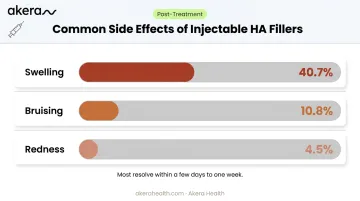
These typically resolve within a few days to a week. Rarer but more serious complications exist: vascular occlusion, tissue damage, infection, and in exceptional cases, vision impairment. These occur when injections are placed incorrectly, which is why choosing a qualified, experienced provider matters. The FDA's guidance on dermal filler risks — widely referenced internationally — advises verifying provider credentials before any filler procedure. In India, dermal fillers fall under CDSCO oversight; always confirm your provider is a licensed medical professional.
Who Should Exercise Caution
- Those with a history of severe allergies or anaphylaxis: HA allergic reactions are rare, but the risk increases in highly reactive individuals
- Pregnant or breastfeeding women: dermal filler safety in pregnancy is unestablished; topical HA is generally considered acceptable, but oral HA supplements lack robust pregnancy safety data
- Anyone with active skin infections or open wounds: these are direct contraindications for injectable treatments
OTC topical and oral supplement forms are considered safe for most healthy adults. Any injectable or prescription-grade HA product requires medical oversight.
Frequently Asked Questions
What does hyaluronic acid do for skin?
HA hydrates skin by attracting and retaining water within tissue. With regular use, it reduces the appearance of fine lines, improves elasticity, and supports a plumper, more supple complexion.
Is hyaluronic acid ok to use every day?
Yes — topical HA is safe for daily use for most people and gentle enough for sensitive skin. It can be applied both morning and night. For best results, apply it to damp skin before sealing with a moisturiser.
Which is better, vitamin C or hyaluronic acid?
They serve different purposes, so it's not really a competition. Vitamin C is an antioxidant that targets pigmentation and brightening; HA focuses on hydration. They work well together — apply vitamin C first, then layer HA on top.
Can hyaluronic acid cause breakouts or make acne worse?
HA itself doesn't clog pores and is generally suitable for acne-prone skin. That said, other ingredients in an HA product can trigger breakouts — always check the full ingredient list before trying something new.
What are the side effects of hyaluronic acid injections?
Common side effects include temporary swelling, redness, bruising, and tenderness at the injection site, which usually resolve within a few days. Rare but serious complications — including vascular occlusion — can occur when treatment isn't administered by a qualified professional.
Can I use hyaluronic acid with retinol or niacinamide?
Yes — HA is compatible with both. It's particularly useful alongside retinol, as it can help offset the dryness and irritation that retinol sometimes causes. There are no known adverse interactions between HA and either of these actives.