Milia are keratin-filled cysts sitting beneath an intact layer of skin. They have no opening to the surface, so standard acne approaches simply don't work. According to StatPearls, they're classified as benign subepidermal keratin cysts — completely harmless, but stubborn without the right approach.
This guide covers exactly what milia are, why they form in adults, how to treat them safely (at home and in-clinic), and how to stop them from coming back.
Key Takeaways
- Milia are keratin-filled cysts — not acne — and should never be squeezed or picked
- They affect adults of all ages, most commonly appearing on cheeks, eyelids, nose, and forehead
- Trapped dead skin cells, heavy products, skin trauma, and steroid cream use are the main triggers
- Treatment spans OTC retinol, professional extraction, and chemical peels — depending on severity
- Non-comedogenic products, regular exfoliation, and daily SPF help prevent recurrence
What Are Milia on the Face?
Milia (singular: milium) are firm, pearly-white cysts typically 1–2 mm in diameter. They form when keratin — the structural protein found in skin cells — becomes trapped beneath the outer skin layer, usually at the base of a hair follicle or sweat gland. New skin grows over the top, sealing the keratin inside and creating that characteristic raised white bump.
Types That Matter for Adults
| Type | How It Forms | Common Location |
|---|---|---|
| Primary milia | Develop spontaneously, no clear trigger | Eyelids, cheeks, forehead |
| Secondary (traumatic) milia | Follow skin injury, burns, or certain products | Site of trauma or procedure |
| Neonatal milia | Present at birth, self-resolving | Face; resolves within weeks |
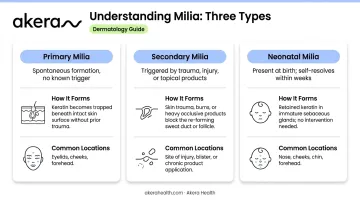
This guide focuses on adult milia — primary and secondary. Neonatal milia clear on their own and don't require intervention.
Why You Can't Pop Them
Unlike whiteheads, milia have no open pore connecting to the skin's surface. A whitehead is a keratin-and-sebum plug inside a dilated pore. You can squeeze it out. A milium is a fully enclosed epithelial-lined cyst with no exit point. Squeezing only damages the surrounding skin without releasing anything — a dermatologist needs to create a micro-opening and extract the contents with the correct technique.
What Causes Milia on the Face?
Adult milia typically trace back to one or more identifiable triggers. Understanding which one applies to you makes treatment and prevention far more targeted.
Cause 1: Trapped Keratin and Slow Cell Turnover
The skin constantly sheds dead cells to make room for new ones. When that shedding slows — from infrequent cleansing, very dry skin, or no exfoliation — dead cells accumulate. New skin grows over them, keratin hardens into a cyst, and a milium forms. This process underlies most primary milia in adults.
Cause 2: Heavy, Occlusive Skincare Products
Thick face creams, rich night creams, heavy facial oils, and pore-clogging makeup can physically block the skin's surface. This traps keratin and dead cells underneath, creating ideal conditions for milia. A review of laser resurfacing complications notes that postprocedural occlusive healing ointments and biosynthetic dressings can cause milia after treatment — the same principle applies to heavy everyday products.
Product types to be cautious with:
- Very thick petroleum-based occlusives applied nightly
- Heavy mineral oil-based balms used as moisturisers
- Rich cream-on-cream layering routines
- Silicone-heavy makeup primers and foundations
Cause 3: Skin Trauma and Resurfacing Procedures
Secondary milia commonly form during wound healing. After thermal burns, blistering skin conditions, dermabrasion, or laser resurfacing, regenerating eccrine ducts and follicles can create pockets where keratin becomes trapped.
Milia are a documented minor complication of fractional CO₂ laser resurfacing; they often resolve spontaneously, with professional extraction used when they persist.
Cause 4: Topical Corticosteroids and Certain Medications
Long-term or unsupervised use of topical steroid creams alters skin texture and is a known cause of secondary milia — a 1977 case report documented localised milia on the ear following a fluorinated topical corticosteroid. Topical 5-fluorouracil has also been associated with milia formation.
Key topicals linked to milia include:
- Fluorinated topical corticosteroids used long-term or without supervision
- Topical 5-fluorouracil, a chemotherapy cream used for skin lesions
If you're using potent prescription topicals, always follow your dermatologist's guidance on duration and frequency.
How to Treat Milia on Your Face
Safe Home Care Approaches
First rule: do not pick, squeeze, or attempt DIY extraction. There's no pore to work with, and the force required to rupture a milia cyst from the outside damages the surrounding skin — raising the risk of scarring and post-inflammatory hyperpigmentation.
What does help at home:
- Daily gentle cleansing with a mild, non-comedogenic face wash using lukewarm water — twice daily, consistently
- Light chemical exfoliation 1–2 times per week using a salicylic acid or glycolic acid-based product to promote cell turnover
- OTC topical retinol applied at night on clean skin — DermNet notes that topical retinoids may help with widespread milia by normalising follicular desquamation; expect several weeks before seeing results, and always follow with SPF the next morning

Home care works best for mild or early milia. It won't resolve an established cyst quickly, and it won't work at all on deeper or longstanding lesions.
Professional Treatment Options
When milia are persistent or home care isn't moving things along, professional treatment gives you precision that no topical product can match.
Clinical extraction involves a dermatologist using a sterile fine needle or blade to carefully de-roof the cyst and remove the hardened keratin plug. In trained hands, it heals quickly and leaves no scarring — a stark contrast to DIY attempts that damage the surrounding intact skin.
Chemical peels using glycolic or salicylic acid accelerate skin cell renewal, unclog follicles, and help clear existing milia while reducing recurrence. At Akera Health, chemical peel treatments use plant-based formulations and are fully customised to your skin type and sensitivity by their board-certified dermatologists — professional peel services start from ₹3,000.
For persistent or widespread milia, other clinical options include:
- Cryotherapy — destroying lesions with liquid nitrogen
- Diathermy and curettage — heat-based removal with scraping
- Laser ablation — used for refractory cases, particularly milia en plaque
All of these require clinical expertise and are not suitable for home use.
What Happens If Milia Is Left Untreated
Milia are entirely benign. They don't become infected on their own, and they carry no cancer risk. In newborns, they resolve within a few weeks without any intervention.
In adults, the picture is different. Unlike neonatal milia, acquired adult milia can persist for months or much longer without any sign of clearing. Cosmetically, clusters of white bumps on the cheeks, eyelids, or nose are noticeable and can affect confidence.
The more significant risk comes from repeated DIY extraction attempts. Forcing out a milia cyst without proper instruments causes skin trauma, which triggers inflammation.
In individuals with Indian skin tones (Fitzpatrick Types IV–VI), this inflammatory injury is particularly likely to result in post-inflammatory hyperpigmentation — a discolouration that can be more persistent and harder to treat than the milia themselves.
Warning Signs This May Not Be Typical Milia
See a dermatologist promptly if you notice:
- Milia that are itchy, inflamed, or sitting on a raised red patch — this may indicate milia en plaque, an uncommon variant requiring different management
- Sudden crops of multiple lesions appearing over weeks (multiple eruptive milia)
- Milia growing in size or spreading rapidly
- Lesions persisting long after a skin injury or procedure
- Any uncertainty about whether what you're seeing is actually milia
An accurate diagnosis matters — several conditions mimic milia, and treating the wrong thing wastes time and can cause harm.
How to Prevent Milia From Recurring
Prevention is about consistently reducing the three main triggers: product congestion, inadequate cell turnover, and UV damage.
Switch to Non-Comedogenic, Lightweight Skincare
Replace heavy creams, thick facial oils, and occlusive balms with lightweight, non-comedogenic moisturisers and serums. In Bengaluru's humid climate, where skin already produces more oil, heavy layered routines are a particular risk factor for both milia and blocked pores.
Akera Health's Bask Sunscreen and cleanser range — available for oily/combination, normal, and dry/sensitive skin — are non-comedogenic and silicone-free, formulated to hydrate and protect without contributing to congestion.
Exfoliate Regularly but Gently
A salicylic acid or glycolic acid-based chemical exfoliant 1–2 times per week maintains healthy cell turnover and prevents dead cell accumulation. Avoid over-exfoliating — a damaged skin barrier can paradoxically worsen milia by triggering more inflammation and disrupted healing. Physical scrubs should also be avoided directly over milia and around the eye area.
Use Broad-Spectrum Sunscreen Daily
Apply an SPF 30+ broad-spectrum sunscreen every morning and choose a lightweight, non-comedogenic formula. Heavy mineral sunscreens that sit on the skin's surface can contribute to pore congestion. For milia-prone skin, the Bask Sunscreen (Oily/Combination Skin) variant works well — its matte, water-based formula absorbs without occluding. Daily protection also reduces hyperpigmentation risk from any post-treatment marks.
Be Cautious With Topical Steroids and Prescription Actives
Don't use topical steroid creams beyond the duration prescribed by your doctor — long-term unsupervised use is a direct cause of secondary milia. When using potent actives like prescription retinoids, hydroquinone, or high-concentration AHAs, always follow your dermatologist's guidance precisely.
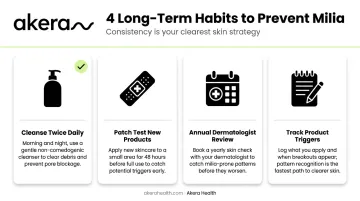
Long-term maintenance habits worth building:
- Cleanse twice daily with a gentle, non-comedogenic face wash
- Patch test new products before full-face use
- Review your skincare routine with a dermatologist annually
- Note which products or skin conditions tend to precede milia breakouts
Conclusion
Most milia clear up once you identify what's driving them. Trapped keratin, heavy occlusive products, skin trauma, UV exposure, and steroid creams are all addressable — through adjusted skincare habits, targeted treatments, or both.
If milia have been present for several months, keep recurring, or you're unsure about your diagnosis, book a consultation with a dermatologist rather than continuing to experiment at home. Akera Health's dermatologists in Bengaluru offer milia extraction and customised chemical peel treatments at their HSR Layout and HRBR Layout clinics. Book via akerahealth.com/pages/contact or call +91 72044 88355 (10 AM–8 PM).
Frequently Asked Questions
What causes milia on the face?
Milia form when dead skin cells and keratin become trapped beneath the skin's surface, enclosed in a small cyst with no opening. In adults, additional triggers include heavy occlusive skincare products, skin trauma (burns, procedures), and long-term topical steroid use.
How do I get rid of milia on my face?
At home, consistent use of a gentle chemical exfoliant and OTC retinol can help over several weeks. For faster, scar-free results, a dermatologist can perform clinical extraction with a sterile needle or blade, or use chemical peels — both significantly quicker than home care alone. At Akera Health, milia extraction and chemical peels are performed by certified dermatologists in a clinical setting.
Is milia the same as whiteheads or acne?
No. Milia and whiteheads look similar but are structurally different. Milia are sealed keratin cysts beneath intact skin; whiteheads are keratin-and-sebum plugs inside dilated pores. Acne treatments don't work on milia — and squeezing risks scarring without clearing anything.
How long does milia last on the face?
In newborns, milia typically resolve within a few weeks. In adults, they can persist for months or years without treatment — unlike infant milia, they rarely clear on their own. Professional treatment is the most reliable way to clear them.
Can milia be prevented?
Adults can reduce their risk by following a few consistent habits:
- Use non-comedogenic, lightweight skincare products
- Exfoliate regularly with a gentle chemical exfoliant
- Apply daily SPF 50+ sunscreen
- Avoid unsupervised long-term use of topical steroids or potent actives
When should I see a dermatologist for milia?
See a dermatologist if milia persist beyond a few months, keep recurring, appear inflamed or in large clusters, or develop after a skin injury or procedure. Professional care ensures accurate diagnosis and prevents scarring.