Introduction
You catch your reflection at an odd angle and notice it — a softness along the jawline that wasn't there a few years ago, or loose skin on the upper arms after losing weight. It's one of those moments that feels equal parts confusing and frustrating, especially when you're not ready for surgery.
Non-surgical skin tightening has become one of the fastest-growing areas in aesthetic medicine for exactly this reason. India recorded 45,463 non-surgical skin tightening procedures in 2023, ranking second globally — a figure that reflects genuine demand, not just trend-chasing.
Effective, clinically backed options now exist that skip the surgery entirely — no general anaesthesia, no lengthy recovery. This article covers what you need to make an informed decision:
- Why skin loses firmness in the first place
- The main treatment categories available in Bengaluru
- Who is a suitable candidate
- What results actually look like — and what they cost
Key Takeaways
- Collagen loss begins in your late 20s; UV damage, weight changes, and smoking accelerate it significantly
- RF microneedling, HIFU/ultrasound, and laser tightening each target different skin depths — no single option suits every patient
- Results appear gradually over 2–6 months, not immediately after treatment
- Most non-surgical treatments carry minimal downtime (24–48 hours of redness)
- Bengaluru session costs range from roughly ₹3,000 to ₹19,000 depending on the treatment type
Why Skin Becomes Loose: The Science of Skin Laxity
Skin firmness depends on two structural proteins: collagen (which provides structure and tensile strength) and elastin (which allows skin to snap back after stretching). Fibroblasts — the cells that produce these proteins — become less active from early adulthood, with collagen production declining roughly 1–1.5% per year after that point.
That gradual decline becomes visible over decades. One study found type-I procollagen content was 68% lower in adults aged 80+ compared to those aged 18–29.
What Accelerates the Process
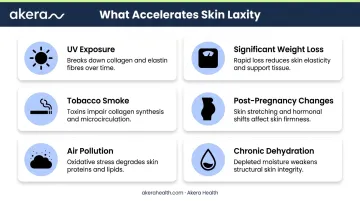
Age alone doesn't tell the whole story. Several environmental and lifestyle factors actively accelerate skin laxity:
- UV exposure — triggers enzymes that actively degrade collagen and elastin in the dermis
- Significant weight loss — rapid changes stretch and then contract the skin, leaving elastin fibres fragmented and collagen density reduced
- Tobacco smoke — increases matrix metalloproteinase activity and reduces synthesis of type-I and type-III collagen
- Post-pregnancy changes — skin stretching followed by contraction affects elastin fibre integrity
- Air pollution — particulate matter accelerates cellular senescence in skin cells
- Chronic dehydration — compromises the skin barrier and reduces turgor
How Non-Surgical Treatments Address This
Non-surgical tightening treatments work on a shared principle: controlled heat energy delivered to the deeper skin layers triggers the body's natural collagen repair response. What separates one treatment from another is how deep that energy penetrates, how precisely it's focused, and whether the skin surface is disrupted in the process.
Types of Non-Surgical Skin Tightening Treatments
Different technologies penetrate the skin at different depths, which is why the "best" treatment depends on the area being treated, the severity of laxity, and your skin type. A dermatologist's assessment is the only reliable way to match the right technology to your specific concern.
Radiofrequency (RF) Therapy and RF Microneedling
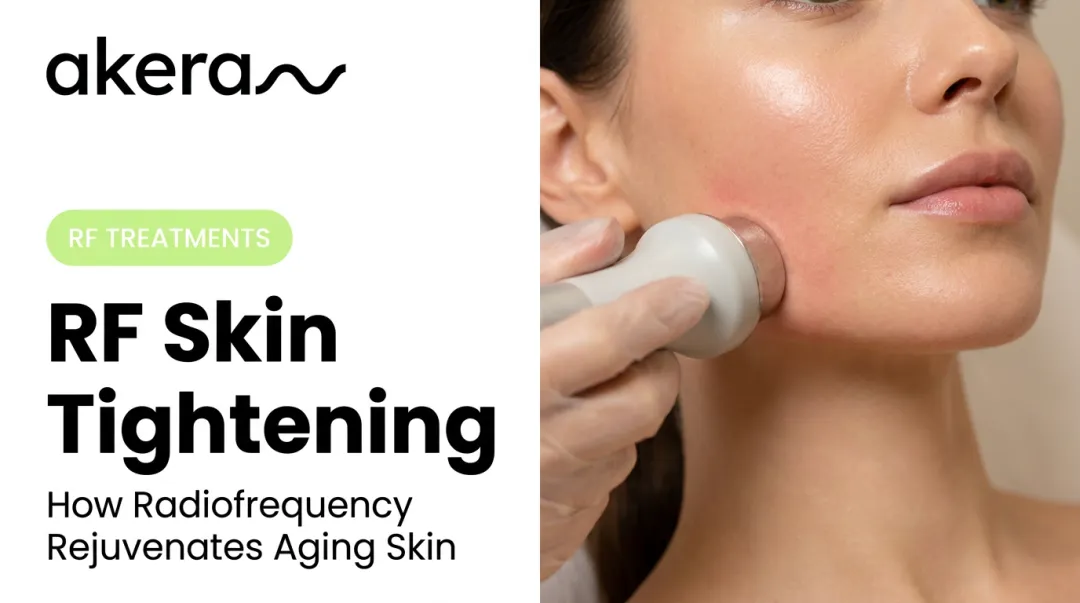
Standard RF therapy delivers electromagnetic energy via a handheld device to heat the dermis and stimulate collagen production. It targets the outer skin layers (epidermis and dermis), and a 2020 in-vivo histometric study confirmed improved collagen and elastic-fibre density following treatment. Results develop over 2–6 months — sometimes from a single session with monopolar RF devices like Thermage, sometimes across a series of sessions depending on the device used.
RF Microneedling — specifically Morpheus8, available at Akera Health as the Morpheus8 Pro — goes meaningfully deeper. Rather than surface-level energy delivery, fine needles physically penetrate the dermis and deliver radiofrequency energy directly into deeper skin layers through those channels. This combination:
- Creates micro-injuries that independently stimulate collagen and elastin production
- Delivers focused RF heat at depths standard surface RF cannot reach (FDA clearance for the InMode/Morpheus8 system confirms needle penetration up to 4mm)
- Treats acne scars, deeper wrinkles, skin laxity, stretch marks, and uneven texture simultaneously
- Involves minimal downtime compared to ablative alternatives
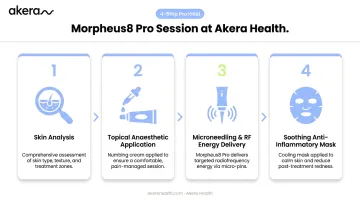
At Akera Health, a Morpheus8 Pro session follows a structured protocol:
- Skin analysis by a dermatologist
- Topical anaesthetic application
- Microneedling and RF energy delivery
- Soothing anti-inflammatory mask post-treatment
One important note: The FDA issued a safety communication in October 2025 about reported risks including burns, scarring, and nerve damage associated with RF microneedling when performed without proper training. This is a direct reminder that the treating provider's qualifications matter as much as the device itself.
Ultrasound Skin Tightening (HIFU)
Microfocused ultrasound technology — commercially known as Ultherapy or HIFU — delivers heat at fixed depths beneath the skin's surface, with Ulthera's transducers targeting 1.5mm, 3.0mm, and 4.5mm depths. The deepest setting reaches the fibromuscular/SMAS plane, the same layer addressed in surgical facelifts.
A 2023 systematic review supports microfocused ultrasound for mild-to-moderate facial laxity, particularly for lifting the brow, jawline, neck, and décolletage. Most patients require one treatment, with results developing over 2–3 months and lasting a year or more. For mild laxity, this is often the most efficient single-session option.
If HIFU is a priority, it's worth discussing during a consultation — Akera Health's current focus is RF microneedling and laser-based treatments, and a dermatologist can help confirm what fits your specific concern.
Laser Skin Tightening
Laser-based treatments use targeted heat to penetrate the dermis and trigger collagen remodelling. There are two broad categories:
| Type | Surface effect | Downtime | Results |
|---|---|---|---|
| Non-ablative | No surface damage | Minimal (1–2 days) | Gradual, subtler |
| Ablative | Removes outer skin layers | 5–7+ days | More significant |
Non-ablative options typically require multiple sessions, with the American Society for Dermatologic Surgery noting that improvement may take several months. Evidence is strongest for facial rejuvenation; results on the upper arms and abdomen are more variable.
Akera Health offers laser toning using the Tri Beam Q-switched Nd:YAG laser, which stimulates collagen production and targets fine lines alongside pigmentation concerns, starting from ₹5,500 per session.
IPL and IPL/RF Combinations
IPL (intense pulsed light) uses multiple wavelengths simultaneously to treat broader skin areas, addressing pigmentation alongside mild laxity. When combined with RF, the two modalities work at different depths for more comprehensive remodelling.
A critical caution for Indian skin tones: Higher epidermal melanin in Fitzpatrick IV–VI skin types increases the risk of burns and post-inflammatory hyperpigmentation with IPL. A dermatologist experienced with diverse skin tones must select appropriate settings — or choose a different modality entirely. Akera Health does not currently offer IPL; its laser-based treatments use Q-switched Nd:YAG technology, which carries a more established safety profile across South Asian skin types.
What to Expect: Results, Side Effects, and Recovery
The Treatment Experience
A typical non-surgical skin tightening session runs 30–90 minutes in clinic. Most procedures use topical anaesthetic (applied 20–30 minutes before treatment) or require none at all. Patients return to normal activity the same day or within 1–2 days for most options.
Realistic Results Timeline
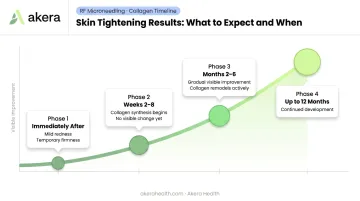
Results take time — and many clinics understate this. Here's what actually happens:
- Immediately after: Possible mild redness and subtle firmness from temporary swelling
- Weeks 2–8: Collagen synthesis begins; changes are not yet visible
- Months 2–6: Gradual, visible improvement as new collagen remodels and organises
- Up to 12 months: Some improvements continue to develop well after treatment
Multiple sessions are standard for most treatment types. Maintenance sessions — typically annually — help sustain results as the underlying ageing process continues.
Side Effects to Expect
Common and temporary:
- Redness — typically resolves within hours to a few days
- Mild swelling that usually settles within 72 hours, especially after ultrasound-based treatments
- Bruising or tenderness (may last 2 days to 2 weeks)
- Tingling or numbness in the treated area, which fades within days
These are not complications — they're normal tissue responses. Rare serious risks (burns, scarring) are much lower when treatment is performed by a trained dermatologist on appropriate equipment.
Aftercare Basics
- Avoid direct sun exposure on treated areas for at least 2 weeks
- Apply SPF daily without exception — Akera's SPF 50+ Sunscreen is formulated for post-procedure skin maintenance
- Follow any specific care instructions provided by your clinician
- Avoid heat (saunas, hot showers) and strenuous activity for 24–48 hours
Setting Honest Expectations
Non-surgical methods deliver meaningful improvement in mild to moderate skin laxity. They cannot replicate the dramatic structural changes of a surgical facelift or tummy tuck. If your laxity is severe, a dermatologist may recommend a combined approach or refer you for a surgical consultation.
Who Is a Good Candidate for Skin Tightening?
Ideal Candidates
- Mild to moderate skin laxity (not significantly sagging skin)
- Stable weight — ongoing fluctuations affect results
- Good general health with no active skin infections in the treatment area
- Realistic expectations about gradual, natural-looking improvement
- Preference for minimal downtime over surgical alternatives
Who Should Consult Carefully (or Avoid)
- Pregnant individuals — Thermage and Ulthera labelling specifically advises against use in pregnancy
- Active electronic implants (pacemakers, defibrillators) — RF-based devices are contraindicated
- Open wounds or active skin infections in the treatment area
- Metal implants in the treatment area (for ultrasound devices)
- Those on medications that affect healing or skin photosensitivity
Reactive vs. Proactive Treatment
These candidacy criteria cover the full spectrum — from early-stage concerns to more noticeable laxity. Many patients in their 30s use RF microneedling and laser treatments proactively, addressing early signs before they become pronounced. Earlier intervention generally means fewer sessions needed to maintain results over time.
Before any treatment proceeds at Akera Health, every patient undergoes a personalised dermatologist consultation. Dr. Lavina Mittal and her clinical team assess genetics, lifestyle, skin type, and severity of concern before recommending a plan — so the approach is always matched to the individual, not the other way around.
Can Skin Tighten Naturally? Lifestyle and At-Home Options
Yes — with honesty about what "naturally" can actually achieve.
What Lifestyle Changes Can Do
- Strength training — a 16-week intervention study found resistance exercise improved skin elasticity and upper-dermal thickness; stronger underlying muscle creates a visibly firmer appearance
- Vitamin C-rich diet — vitamin C is a cofactor in collagen-stabilising reactions; without adequate dietary intake, collagen synthesis is impaired
- High-protein diet — collagen synthesis requires amino acid building blocks from dietary protein
- Stopping smoking — tobacco smoke actively degrades collagen and elastin; cessation slows that damage
- Consistent hydration — supports barrier function and skin turgor
What Topical Products Can and Cannot Do
Retinoids (retinol, tretinoin), peptides, niacinamide, and alpha hydroxy acids can deliver real improvements in skin texture, fine lines, and surface quality over months of consistent use. The American Academy of Dermatology is direct on the limitation: no cream penetrates deeply enough to lift or meaningfully tighten skin the way in-clinic energy-based procedures can. Topicals deliver real surface-level gains — they simply cannot replicate the collagen remodelling that happens at the dermis level with energy-based treatments.
The Right Framing
Lifestyle habits and topicals work best as maintenance, not primary treatment. Clinical procedures drive the structural change; consistent healthy habits protect and extend those results. For most people dealing with visible laxity, that combination — clinical intervention followed by disciplined upkeep — produces outcomes that neither approach achieves independently.
Cost of Skin Tightening Treatments in Bengaluru
Costs vary based on technology, treatment area, number of sessions, and the clinic's expertise. A single price figure without a consultation is meaningless — what matters is the cost per treatment plan, not per session in isolation.
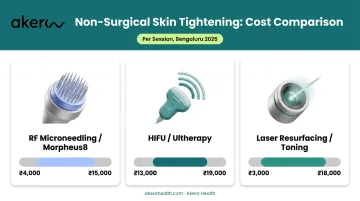
Approximate Price Ranges in Bengaluru (2025)
| Treatment | Approximate Cost Per Session |
|---|---|
| RF Microneedling (MNRF/Morpheus8) | ₹4,000 – ₹15,000 |
| HIFU / Ultrasound (e.g., Ultherapy) | ₹13,000 – ₹19,000 |
| Laser Resurfacing / Toning | ₹3,000 – ₹18,000 |
At Akera Health specifically:
- Morpheus8 Pro RF Microneedling — from ₹10,000 per session
- Laser Toning (Tri Beam) — from ₹5,500 per session
- Chemical Peels — from ₹3,000 per session
These are elective cosmetic procedures excluded from standard health insurance coverage under IRDAI regulations in India.
Cost is a legitimate factor, but provider qualifications and technology carry equal weight. A lower-priced session on substandard equipment — or with an undertrained operator — typically costs far more in the long run.
Akera Health walks through pricing in full during consultations, so patients know exactly what their treatment plan includes before committing.
Frequently Asked Questions
What is the best treatment for skin tightening?
There's no single best option — it depends on the area, degree of laxity, skin type, and budget. RF microneedling, HIFU/ultrasound, and non-ablative laser are among the most evidence-backed non-surgical choices. A dermatologist can assess your skin and recommend the most appropriate treatment for your specific concerns.
Can skin tighten naturally?
Strength training, a protein and vitamin C-rich diet, staying hydrated, and consistent retinoid use can improve skin firmness over time. These work best as maintenance tools — they support results but cannot replicate the collagen remodelling that energy-based procedures deliver.
How many sessions are needed for skin tightening results?
It varies by modality. Microfocused ultrasound (HIFU) may show meaningful results after one session for mild laxity. RF microneedling typically requires 3–5 sessions for optimal outcomes. Annual maintenance sessions are recommended for most treatments to sustain results.
Is skin tightening safe for darker Indian skin tones?
RF and ultrasound-based treatments are generally safe across all skin tones, including Fitzpatrick IV–VI (medium-brown to deep skin tones). Some IPL-based treatments carry a higher risk of burns and hyperpigmentation in darker skin. Choosing a dermatologist experienced with your skin type is essential.
What is the downtime after a skin tightening procedure?
Most non-surgical skin tightening procedures involve 24–48 hours of mild redness or swelling, after which patients return to normal activity. More intensive ablative laser resurfacing may require 5–7 days of visible recovery.
When will I see results from skin tightening treatment?
Results appear gradually as new collagen forms — most patients notice visible improvement between 2–6 months after treatment. Some results continue developing for up to a year post-session, since collagen remodelling takes time to complete.