So, does a chemical peel actually remove tan? Yes — chemical peels exfoliate the melanin-rich outer skin layers and accelerate cell turnover, visibly reducing tan and uneven tone. They're not a one-session fix, but with the right peel type and a proper aftercare routine, results are real and achievable.
This guide covers how chemical peels remove tan, which acid types suit different Indian skin tones, what to expect during and after treatment, and how to protect your results.
Key Takeaways
- Chemical peels remove tan by shedding pigmented outer skin cells and stimulating fresh, evenly toned cell growth
- Superficial peels suit surface tan; medium-depth peels target more resistant pigmentation
- Darker Indian skin (Fitzpatrick IV–VI) requires careful peel selection to avoid post-inflammatory hyperpigmentation (PIH)
- Mild tan clears in 1–3 sessions; moderate pigmentation typically needs 4–6 sessions, spaced 2–4 weeks apart
- Daily SPF 30+ sunscreen after treatment is non-negotiable; skipping it allows tan to return
What Is a Chemical Peel and How Does It Remove Tan?
A chemical peel is an exfoliating acid solution applied to the skin's surface. It dissolves the bonds holding dead, pigmented cells together, prompting the darkened outer layer to shed and revealing fresher skin beneath.
How Tanning Happens
UV exposure triggers the skin to produce excess melanin as a protective response. This melanin accumulates in the epidermis — the outermost skin layer — causing the darkening, uneven tone, and patchy discolouration most people recognise as a tan. The deeper or more prolonged the UV exposure, the more melanin builds up.
How Peels Reverse It
According to research on chemical peel mechanisms, the acid creates controlled exfoliation through keratocoagulation and loss of adhesion between epidermal cells. The repair response then produces new keratinocytes with more even melanin distribution. Collagen stimulation during this process also improves skin luminosity and produces a more even texture.
Three peel depth categories determine how far the acid penetrates:
| Depth | Anatomical Reach | Best For |
|---|---|---|
| Superficial | Epidermis only | Surface tan, mild uneven tone — first-line choice |
| Medium | Epidermis + papillary dermis | Stubborn or moderate pigmentation, with more downtime |
| Deep | Mid-reticular dermis | Structural photoaging — not appropriate for routine tan |
For most tan removal cases, uncomplicated surface tan does not justify going beyond a superficial peel. Medium-depth peels are reserved for resistant pigmentation under dermatologist supervision. That said, peels do have clear boundaries — and knowing those limits helps set realistic expectations.
What Chemical Peels Cannot Do
Peels do not tighten sagging skin, correct deep structural scars, or treat conditions where the skin barrier is already compromised. Very deep sun damage — solar lentigines or dermal melasma — may need complementary treatments like laser toning alongside a peel program.
Best Chemical Peels for Tan Removal
Different acids suit different skin types and tan severities. The table below summarizes the key differences, followed by a closer look at each option:
| Peel Type | Best For | Skin Tone Suitability | Depth |
|---|---|---|---|
| Glycolic Acid (AHA) | Surface tan, photoaging | Normal to dry; caution on darker tones | Superficial |
| Lactic Acid (AHA) | Mild tan, dullness | Dry, sensitive | Superficial |
| Salicylic Acid (BHA) | Oily, acne-prone skin with tan | All types, including darker skin | Superficial |
| Mandelic Acid | Pigmentation, uneven tone | Dark and Indian skin tones | Superficial–medium |
| TCA | Stubborn or deeper tan | Lighter skin tones; high PIH risk on darker | Medium |
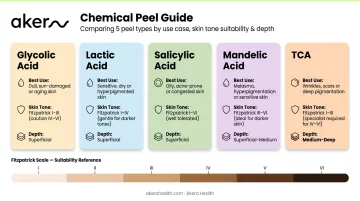
Glycolic Acid Peel (AHA)
Derived from sugarcane, glycolic acid is one of the most researched options for surface tan and photoaging. A double-blind study of 41 volunteers using 50% glycolic acid weekly for four weeks showed improvement in mild photoaging and increased epidermal thickness. It works well on normal-to-dry skin but penetrates quickly — concentrations need careful management on darker skin tones to avoid irritation.
Lactic Acid Peel (AHA)
A gentler, milk-derived AHA with added hydrating properties. It promotes cell renewal with less irritation risk, making it a sensible first choice for dry or sensitive skin dealing with mild tan and dullness.
Salicylic Acid Peel (BHA)
Oil-soluble and pore-penetrating, salicylic acid suits oily, acne-prone skin with surface tan. Its anti-inflammatory properties help prevent breakouts triggered by sun-damaged skin. A study of 25 patients with skin types V–VI found 88% showed moderate-to-significant improvement across conditions including oily skin, PIH, and melasma.
Mandelic Acid Peel
Mandelic acid's larger molecular size means slower, more uniform penetration, which lowers the risk of sudden irritation. This makes it particularly well-suited for Indian and darker skin tones where aggressive peels can trigger PIH rather than resolve pigmentation.
TCA (Trichloroacetic Acid) Peel
A medium-depth peel used for stubborn or deeper tan and moderate pigmentation. TCA produces stronger results but involves 7–14 days of recovery and carries significantly higher PIH risk for darker skin. It should only be performed by a qualified dermatologist.
Because peel selection depends on skin type, tan severity, and individual tolerance, a professional assessment is essential before treatment. At Akera Health, dermatologists evaluate each patient before recommending a peel, and the clinic uses plant-based peel solutions suited to sensitive Indian skin. Professional peel sessions start from ₹3,000.
Is Chemical Peel Safe for Indian Skin Types?
Peel selection matters more for Indian skin than for lighter skin types — and the reason is biological, not cosmetic.
Indian skin typically falls in the Fitzpatrick IV–VI range, meaning higher baseline melanin activity. When the skin experiences peel-induced inflammation, it can respond by producing more pigment, a condition called post-inflammatory hyperpigmentation (PIH). This can leave darker patches in the very areas you were trying to treat.
Which Peels Are Safer for Darker Skin
According to Indian standard guidelines for chemical peels:
- Mandelic and lactic acid peels are generally preferred as first-line options, with slower penetration and lower irritation risk
- Glycolic acid peels require conservative concentrations and dermatologist supervision
- TCA peels demand great caution — medium-depth TCA substantially increases PIH and healing risk for Fitzpatrick IV–VI skin
- Deep peels are not recommended for Indian skin in routine tan care
Contraindications to Screen For
A pre-peel consultation should screen for conditions that make treatment unsafe or increase complication risk:
- Active skin infections or dermatitis — defer until resolved
- Recent sunburn or intense UV exposure — allow full recovery first
- Keloid or hypertrophic scar history — requires specialist assessment
- Pregnancy — glycolic and lactic peels are considered relatively safer, but elective treatment needs dermatologist and obstetric review
- Recent isotretinoin use — requires clinical evaluation; medium and deep peels need particular caution in this group
What to Expect: Sessions, Procedure, and Timeline
The In-Clinic Procedure
A typical chemical peel appointment runs 20–45 minutes and follows these steps:
- Cleansing and degreasing — removes surface oils and prepares skin for even acid penetration
- Protection of sensitive areas — eyes and surrounding skin are shielded
- Acid application — the dermatologist applies the solution and monitors skin response closely
- Neutralisation — AHA peels are neutralised to stop the reaction; timing is carefully controlled
- Post-peel soothing — a cold compress or calming agent reduces immediate tingling or stinging
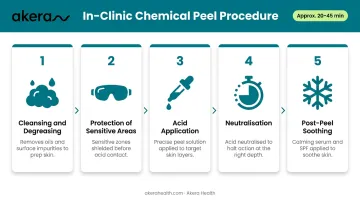
Mild tingling during application is normal. A medium-depth peel causes stronger sensations, some whitening of the skin, and more visible peeling in the days following. How many sessions you'll need depends on how deep the pigmentation runs.
Realistic Session Expectations
| Tan Severity | Sessions Needed | Spacing |
|---|---|---|
| Mild surface tan | 1–3 sessions | 2–4 weeks apart |
| Moderate pigmentation | 4–6 sessions | 2–3 weeks apart |
| Stubborn / deeper tan | Fewer sessions, but more downtime | Dermatologist-determined |
Visible results typically appear within 7–10 days following a session with proper aftercare.
Pre-Peel Preparation
Two to four weeks before your first peel, your dermatologist may recommend:
- Discontinue retinoids, scrubs, waxing, and depilatory creams at least one week before treatment
- Apply a priming agent such as kojic acid or vitamin C serum to improve penetration uniformity and lower PIH risk
- Avoid excessive sun exposure in the weeks prior — UV damage right before a peel can cause uneven pigmentation outcomes
Post-Peel Care: How to Maintain Results
After a chemical peel, new skin is significantly more photosensitive. Without proper protection, UV re-exposure can reverse brightness gains and worsen pigmentation — undoing the treatment's effect faster than most people expect. Aftercare covers two phases: a short-term routine while skin heals, and long-term habits to keep results intact.
Non-Negotiable: Daily Sunscreen
The AAD recommends broad-spectrum, water-resistant SPF 30 or higher applied every day after a chemical peel. Akera Health's Bask Sunscreen range (SPF 50+) is formulated for Indian skin across three variants — oily/combination, normal, and dry/sensitive — at ₹1,299 each. For post-peel skin, the dry/sensitive variant's gentler, hydrating formula suits recovering skin particularly well.
Short-Term Aftercare Routine
- Cleanse with a gentle, fragrance-free formula — nothing with active acids or exfoliants
- Moisturise regularly with a dermatologist-recommended product to support barrier recovery
- Resist touching, picking, or rubbing flaking skin — let it shed on its own
- Hold off on retinoids, AHAs, and BHAs until your dermatologist confirms the skin has fully healed
Sustaining Results Long-Term
Chemical peel results are not permanent on their own — ongoing UV exposure will restart melanogenesis. To maintain brightness:
- Apply sunscreen daily, including on cloudy days
- Avoid peak-hour sun exposure (10 AM – 4 PM) when UV index is highest
- Stay hydrated and include antioxidant-rich foods in your diet
- Schedule a follow-up with your dermatologist to adjust the treatment plan based on your skin's response
Frequently Asked Questions
Which chemical peel is best for tan removal?
The right peel depends on your skin type and tan depth. Mandelic and lactic acid peels suit sensitive or darker skin tones, glycolic acid works well for mild tan on normal skin, and TCA addresses stubborn pigmentation. Always get a dermatologist assessment first, since the same concentration can behave quite differently across skin types.
How can I remove tan from my face?
For mild tan, sunscreen, vitamin C serums, and gentle exfoliation form a solid home-care base. For persistent or uneven tan, clinical options like chemical peels, laser toning, or brightening facials deliver more significant results. A consultation helps match the right treatment to your skin.
How many sessions of chemical peel are needed for tan removal?
Mild tan may respond within 1–3 sessions. Moderate or deeper pigmentation typically requires 4–6 sessions spaced 2–4 weeks apart. Consistent sunscreen use between sessions is essential — without it, results take longer and fade faster.
Is chemical peel safe for dark or Indian skin tones?
Yes, when the right peel type and concentration are selected. Mandelic and lactic acid peels are generally the safest starting points for darker skin, but dermatologist supervision is important throughout to monitor for PIH and adjust the protocol as needed.
How long do the results of a chemical peel for tan removal last?
Results can last several weeks to months, depending largely on sun exposure habits and daily skincare. Without consistent sunscreen use and sun avoidance, tan will return — often within weeks. Regular maintenance sessions and reliable sun protection are what make results last.